

Most people believe that brushing twice a day is enough to maintain healthy teeth and gums. Yet many still experience cavities, bleeding gums, bad breath, plaque buildup, or unexpected dental problems. The reason is that good oral health depends on more than brushing alone. A complete oral hygiene routine involves proper brushing, interdental cleaning, tongue care, healthy habits, and regular professional dental care. Your mouth contains millions of bacteria. Some are harmless, while others contribute to tooth decay, gum disease, and unpleasant breath. Without a consistent oral hygiene routine, plaque begins forming on teeth every day. Over time, this plaque can harden into tartar, increasing the risk of gingivitis, periodontitis, and tooth loss.
The good news is that most oral health problems are preventable. By following a structured daily routine, you can significantly reduce plaque buildup, protect your enamel, keep your gums healthy, and maintain a confident smile. We will tell you the best oral hygiene routine step by step, helping Australians understand exactly what dentists recommend for long-term oral health.
Why a Proper Oral Hygiene Routine Matters
A proper oral hygiene routine is one of the most important investments you can make in your overall health. Every day, food particles, bacteria, and saliva combine to form plaque on the teeth and along the gumline. If plaque is not removed regularly, it creates an environment where harmful bacteria thrive. These bacteria release acids that attack tooth enamel and irritate gum tissue. Good oral hygiene does much more than keep teeth looking clean. It helps prevent cavities, gum disease, bad breath, and costly restorative treatments. It also supports comfort when eating, speaking, and smiling. For many people, maintaining healthy teeth and gums contributes to confidence and quality of life. Dental professionals frequently see patients whose oral health problems could have been prevented through consistent home care. A few minutes each day can make a significant difference in protecting natural teeth for many years.
How Oral Hygiene Affects Teeth, Gums, and Overall Health
Oral health and overall health are closely connected. The mouth serves as an entry point to the body, and inflammation or infection in the gums can affect more than just the teeth. When plaque accumulates around the gumline, the body’s immune system responds with inflammation. This can lead to gingivitis, which causes redness, swelling, and bleeding gums. If left untreated, the condition may progress to periodontitis, a more advanced form of gum disease that damages the bone supporting the teeth.
Research has also identified associations between poor oral health and conditions such as diabetes, cardiovascular disease, and respiratory infections. While maintaining good oral hygiene does not guarantee prevention of these conditions, it helps reduce oral inflammation and supports overall wellbeing. Healthy teeth and gums allow people to eat comfortably, speak clearly, and enjoy a better quality of life. This is why daily oral care remains a key part of preventive healthcare.
What Happens When Oral Hygiene Is Neglected
Neglecting oral hygiene creates the perfect environment for plaque and bacteria to multiply. Initially, the effects may seem minor, such as occasional bad breath or slight gum bleeding. However, these early warning signs often indicate underlying problems. Without regular plaque removal, common consequences include:
- Tooth decay and cavities
- Gingivitis
- Periodontal disease
- Persistent bad breath
- Gum recession
- Tooth sensitivity
- Tooth loss in severe cases
Many dental conditions develop gradually and may not cause pain until significant damage has occurred. This is why prevention remains more effective and less costly than treatment.
Understanding Plaque, Tartar, and Oral Bacteria
Understanding how plaque and bacteria affect the mouth helps explain why daily oral hygiene is so important. Every person naturally has bacteria in their mouth. The goal is not to eliminate all bacteria but to control harmful bacterial growth before it causes damage. Plaque and tartar are two of the most common contributors to oral health problems. Although they are closely related, they are not the same thing.
What Is Dental Plaque?
Dental plaque is a soft, sticky film that constantly forms on teeth. It consists of bacteria, food particles, and saliva proteins. Plaque begins developing shortly after brushing and continues to build throughout the day. When sugars and carbohydrates are consumed, bacteria in plaque produce acids. These acids weaken enamel and increase the risk of cavities. Plaque also accumulates along the gumline, where it can trigger inflammation and bleeding. Because plaque is soft, it can usually be removed through effective brushing and interdental cleaning. Consistency is essential because plaque forms every day.
How Tartar Develops
When plaque is not removed promptly, minerals from saliva cause it to harden into tartar, also known as dental calculus. Unlike plaque, tartar cannot be removed by brushing or flossing at home. Tartar creates a rough surface that attracts even more plaque, allowing bacteria to accumulate more easily. It commonly forms near the gumline and contributes to gum inflammation and periodontal disease. Professional dental cleaning is required to remove tartar safely. This is one reason why regular dental check-ups remain important even for individuals who maintain good home care habits.
Why Plaque Control Is Essential
Plaque control is the foundation of preventive dentistry. Removing plaque regularly reduces the number of harmful bacteria in the mouth and lowers the risk of many common dental problems. Effective plaque control helps:
- Prevent cavities
- Reduce gum inflammation
- Lower the risk of periodontal disease
- Improve breath freshness
- Protect tooth enamel
- Support long-term oral health
A successful oral hygiene routine focuses on disrupting plaque before it hardens into tartar. This daily effort provides lasting benefits and helps preserve natural teeth throughout life.
Step-by-Step Daily Oral Hygiene Routine
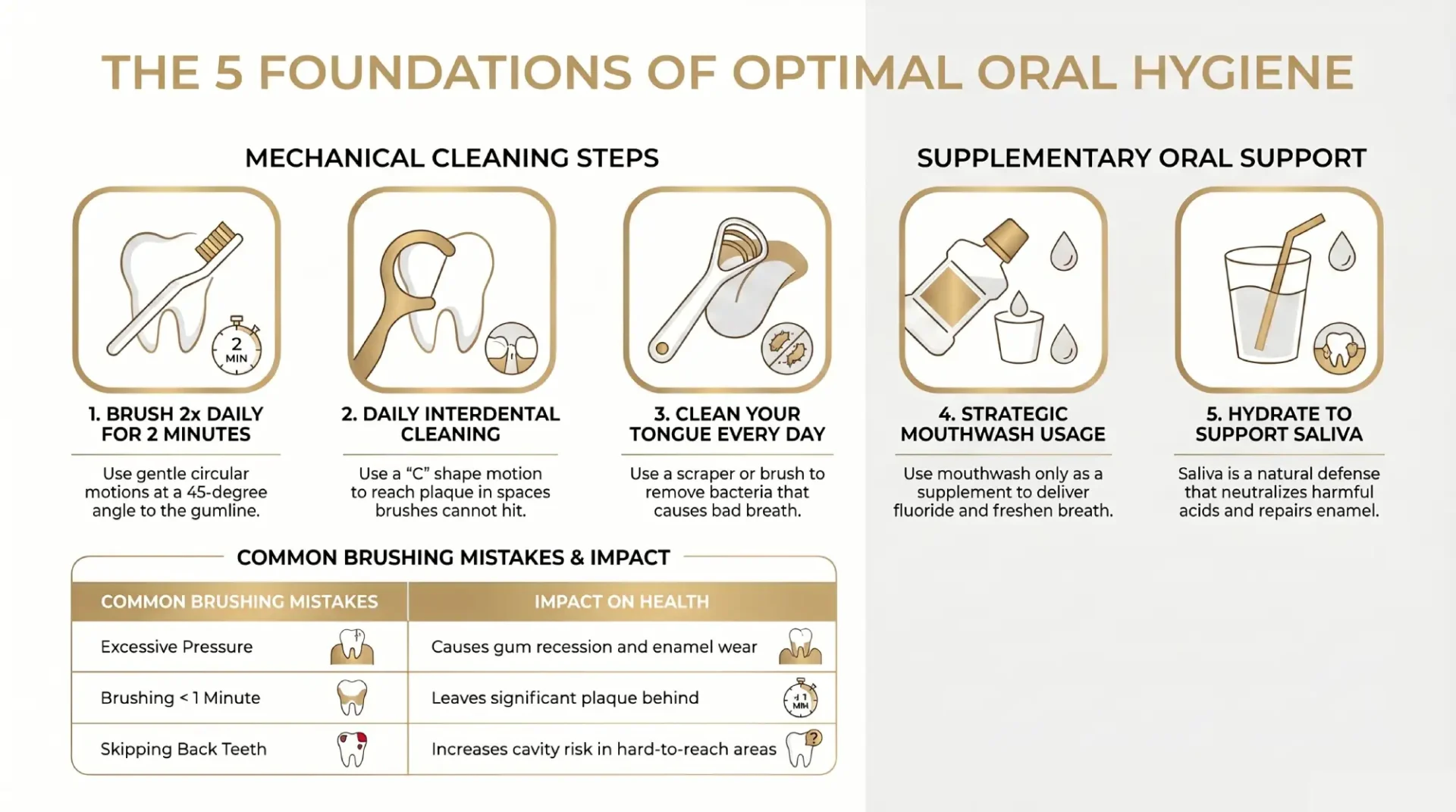
A successful oral hygiene routine is built on consistency and correct technique. Many people brush every day but still struggle with plaque buildup, gum irritation, or cavities because important steps are missed or performed incorrectly. Following a structured daily routine helps remove plaque more effectively, protect the gums, and maintain fresh breath throughout the day. The following steps reflect the routine commonly recommended by dental professionals for maintaining healthy teeth and gums.
Step 1: Brush Your Teeth Properly Twice a Day
Brushing is the foundation of oral hygiene. It removes plaque, food debris, and bacteria from tooth surfaces before they can cause damage. However, brushing technique matters just as much as brushing frequency. Many people brush quickly or focus only on visible tooth surfaces. This often leaves plaque behind near the gumline and between teeth, where oral health problems commonly begin. Brushing twice daily with fluoride toothpaste helps control plaque, reduce cavity risk, and maintain healthier gums. The most important brushing session is usually before bed because plaque and bacteria continue to accumulate while you sleep.
The Correct Brushing Technique
Using the correct technique allows you to remove plaque effectively without damaging enamel or gum tissue. Dentists generally recommend:
- Holding the toothbrush at a 45-degree angle to the gumline
- Using gentle circular motions
- Cleaning the outer, inner, and chewing surfaces of every tooth
- Paying special attention to the gumline where plaque commonly collects
- Avoiding aggressive scrubbing motions
Brushing too hard does not clean teeth better. In fact, excessive pressure can contribute to gum recession and enamel wear over time. Taking a systematic approach helps ensure that no areas are missed during brushing.
How Long Should You Brush?
The Australian Dental Association recommends brushing for approximately two minutes each time. Many people underestimate how long they actually brush and may spend less than one minute cleaning their teeth. This often leaves plaque behind and reduces the effectiveness of the routine. A two-minute brushing session allows enough time to thoroughly clean all areas of the mouth. Common brushing mistakes include:
- Brushing for too short a time
- Skipping back teeth
- Applying excessive pressure
- Forgetting the gumline
- Using a worn toothbrush
Improving these habits can make a noticeable difference in oral health.
Step 2: Clean Between Your Teeth Daily
Even excellent brushing cannot reach every area of the mouth. Toothbrush bristles primarily clean exposed tooth surfaces, leaving the spaces between teeth vulnerable to plaque accumulation. Interdental cleaning removes plaque from these difficult-to-reach areas and plays a major role in preventing gum disease and tooth decay. Many patients who develop cavities between teeth or experience bleeding gums have one thing in common: they skip daily interdental cleaning.
Why Interdental Cleaning Is Essential
The spaces between teeth create ideal conditions for plaque growth. Food particles can become trapped, allowing bacteria to multiply and produce acids that attack enamel.
Regular interdental cleaning helps:
- Remove plaque between teeth
- Reduce gum inflammation
- Lower cavity risk
- Improve breath freshness
- Prevent gingivitis and periodontitis
Cleaning these areas daily is one of the most effective ways to support long-term gum health.
Flossing Correctly for Maximum Plaque Removal
Traditional dental floss remains one of the most effective tools for removing plaque from tight spaces between teeth. Effective flossing involves:
- Using a clean section of floss between each tooth
- Gently guiding the floss beneath the gumline
- Curving the floss around each tooth in a “C” shape
- Moving the floss up and down against the tooth surface
Many people snap floss between teeth, which can irritate the gums and reduce cleaning effectiveness. Proper flossing may take practice, but it remains a valuable part of a complete oral hygiene routine.
Step 3: Clean Your Tongue Every Day
Tongue cleaning is often overlooked, yet the tongue can harbour large amounts of bacteria that contribute to bad breath and plaque accumulation. The tongue’s textured surface creates small spaces where bacteria, food debris, and dead cells can collect. Without regular cleaning, this buildup can affect oral freshness and hygiene. Adding tongue cleaning to your routine requires only a few seconds but provides significant benefits.
Why Tongue Cleaning Matters
The tongue contains one of the largest concentrations of oral bacteria in the mouth. Cleaning the tongue helps:
- Reduce bad breath
- Remove bacterial buildup
- Improve overall oral cleanliness
- Support fresher breath throughout the day
Many people notice an improvement in breath freshness shortly after introducing tongue cleaning into their daily routine.
Tongue Scrapers vs Toothbrushes
Both tongue scrapers and toothbrushes can be used to clean the tongue effectively. A tongue scraper is specifically designed to remove surface debris and bacterial coating. Many people find it more effective than using a toothbrush alone. A toothbrush can still provide good results when used gently across the tongue surface from back to front. The most important factor is consistency rather than the specific tool used.
Step 4: Use Mouthwash Strategically
Mouthwash can provide additional support for oral hygiene, but it should never replace brushing or interdental cleaning. Think of mouthwash as a supplementary tool rather than the primary defence against plaque and gum disease. Different types of mouthwash serve different purposes, so choosing the right product matters.
What Mouthwash Can and Cannot Do
Mouthwash can help:
- Freshen breath
- Reduce certain bacteria
- Deliver fluoride to tooth surfaces
- Support gum health in some situations
However, mouthwash cannot:
- Remove plaque physically
- Replace brushing
- Replace flossing
- Remove tartar
Its greatest value comes when it is used alongside a complete oral hygiene routine.
Step 5: Stay Hydrated and Support Natural Saliva Production
Saliva is one of the body’s most effective natural defences against tooth decay and gum disease. Yet many people underestimate its importance.
Saliva helps:
- Wash away food particles
- Neutralise harmful acids
- Deliver minerals that support enamel repair
- Control bacterial growth
Reduced saliva flow can increase the risk of cavities, gum disease, and bad breath.
The Role of Saliva in Oral Health
A healthy saliva flow supports the natural balance of the mouth. When saliva levels are adequate, teeth benefit from ongoing protection throughout the day. Saliva also helps maintain comfort when eating, speaking, and swallowing. This protective system works continuously, making hydration an important part of oral health.
Causes of Dry Mouth
Dry mouth, also known as xerostomia, can result from various factors. Common causes include:
- Certain medications
- Age-related changes
- Diabetes
- Medical treatments
- Dehydration
- Mouth breathing
People experiencing persistent dry mouth often face a higher risk of tooth decay because the mouth loses some of its natural protective mechanisms. Drinking water regularly, limiting alcohol consumption, and discussing symptoms with a dental professional can help manage dry mouth effectively. As part of preventive care, St Leonards Green Dental helps patients identify factors contributing to dry mouth and provides practical recommendations to support healthier saliva function and long-term oral health.
Foods and Drinks That Support Healthy Teeth
The foods and beverages you consume each day play a significant role in maintaining oral health. Teeth and gums require essential nutrients to stay strong and resistant to disease. While oral hygiene products help remove plaque and bacteria, nutrition supports the body’s natural ability to maintain healthy oral tissues and repair minor damage caused by daily acid exposure.
Tooth-Friendly Foods
Certain foods provide valuable benefits for oral health because they contain nutrients that strengthen teeth while also encouraging saliva production. Dairy products such as milk, cheese, and yoghurt are rich in calcium and phosphorus, which help maintain enamel strength. Crunchy vegetables like carrots and celery can stimulate saliva flow, helping wash away food particles and neutralise acids. Fresh fruits, leafy greens, lean proteins, nuts, and seeds also contribute to healthier teeth and gums. Although these foods support oral health, they work best when combined with a consistent daily cleaning routine.
Nutrients Important for Oral Health
Strong teeth and healthy gums depend on several key nutrients. Calcium supports the structure of teeth and jawbones, while vitamin D helps the body absorb calcium effectively. Phosphorus works alongside calcium to strengthen enamel and maintain tooth integrity. Vitamin C supports healthy gum tissue and helps the body repair damaged tissues. A balanced diet containing these nutrients can improve oral health outcomes and reduce the risk of common dental problems over time.
Habits That Can Damage Your Oral Health
Even the most thorough oral hygiene routine can be affected by habits that place teeth and gums under constant stress. Many dental problems develop gradually through repeated exposure to harmful behaviours. Identifying these habits early can help reduce the risk of long-term damage and costly dental treatment.
Frequent Sugar Consumption
Sugar remains one of the leading causes of tooth decay worldwide. Every time sugary foods or drinks are consumed, bacteria in dental plaque produce acids that attack enamel. Frequent snacking can be particularly harmful because it exposes teeth to repeated acid attacks throughout the day. Over time, this weakens enamel and increases the likelihood of cavities. Limiting sugary snacks and choosing water more often can significantly reduce decay risk.
Smoking and Tobacco Use
Smoking affects almost every aspect of oral health. Tobacco use increases the risk of gum disease, tooth loss, bad breath, delayed healing, and oral cancer. It also reduces blood flow to the gums, making it harder for the body’s natural healing processes to fight infection. Many smokers do not realise the extent of the damage until advanced gum disease develops. Stopping smoking benefits both oral and overall health and can improve the long-term success of dental treatments.
Excessive Acidic Drinks
Acidic beverages can gradually wear away tooth enamel. Soft drinks, energy drinks, sports drinks, and citrus-based beverages expose teeth to acids that weaken enamel over time. Unlike a cavity, enamel erosion cannot be reversed once it occurs. People who frequently consume acidic drinks may notice increased sensitivity, discolouration, or changes in tooth shape. Drinking water after acidic beverages and limiting consumption can help protect enamel.
Teeth Grinding and Clenching
Many people grind or clench their teeth without realising it, particularly while sleeping. This habit, known as bruxism, places excessive pressure on teeth and can cause significant wear over time. Grinding may contribute to cracked teeth, jaw discomfort, headaches, and damage to existing dental restorations. Dentists often identify signs of grinding during routine examinations and may recommend protective solutions such as custom night guards.
Why Home Care Alone Is Not Enough
Even people with excellent oral hygiene routines cannot remove hardened tartar once it forms. Professional dental care plays an important role in maintaining oral health because it addresses problems that cannot be managed effectively at home.
Areas Professional Cleaning Can Address
Professional dental cleans remove tartar deposits, stubborn plaque buildup, and surface stains that brushing and flossing cannot eliminate. They also allow dental professionals to assess gum health and identify early signs of disease before symptoms become severe.
Benefits of Preventive Dental Visits
Preventive dental visits help detect problems while they are still small and easier to treat. Regular examinations can identify cavities, gum disease, cracked teeth, and other concerns before they progress. Early intervention often means simpler treatment, lower costs, and better long-term outcomes.
How Often Should You Visit a Dentist?
Regular dental visits remain a key component of preventive oral healthcare. While individual needs vary, routine examinations allow dentists to monitor changes in oral health and provide professional maintenance. Most Australians benefit from dental examinations and professional cleans every six months. These visits provide an opportunity to remove tartar, assess gum health, and identify developing issues before they become more serious. Some individuals require more frequent reviews due to elevated risk factors. Patients with gum disease, dental implants, diabetes, a history of frequent cavities, or smoking habits may benefit from shorter intervals between appointments. Recommendations are based on individual circumstances and oral health status.
Common Oral Hygiene Mistakes
Many people brush daily but still make mistakes that reduce the effectiveness of their routine. Small errors repeated over time can contribute to oral health problems.
Brushing Too Hard
Applying excessive pressure while brushing can wear down enamel and contribute to gum recession. Gentle, thorough brushing is generally more effective than aggressive scrubbing.
Skipping Flossing
Plaque between teeth often remains untouched without flossing or another form of interdental cleaning. This increases the risk of cavities and gum disease in areas a toothbrush cannot reach.
Replacing Toothbrushes Too Late
Worn toothbrush bristles lose their effectiveness and may fail to remove plaque adequately. Replacing toothbrushes regularly helps maintain cleaning efficiency.
Rinsing Away Fluoride Immediately After Brushing
Many people rinse vigorously after brushing, removing fluoride from tooth surfaces before it has time to provide maximum benefit. Spitting out excess toothpaste without excessive rinsing helps fluoride remain in contact with teeth for longer.
Ignoring Early Signs of Gum Disease
Bleeding gums, swelling, and persistent bad breath should never be dismissed as normal. These symptoms may indicate gum disease and should be evaluated by a dental professional.
Dentist-Recommended Daily Oral Hygiene Checklist
Morning Routine
- Brush with fluoride toothpaste
- Clean your tongue
- Drink water after waking
Evening Routine
- Brush thoroughly for two minutes
- Floss or use a water flosser
- Use mouthwash if recommended
Ongoing Habits
- Stay hydrated
- Limit sugary snacks
- Attend regular dental check-ups
- Replace toothbrushes regularly
The Best Oral Hygiene Routine Is the One You Follow Consistently
The most effective oral hygiene routine is not necessarily the most complicated one. Success comes from consistently following simple, proven habits every day. Brushing twice daily, cleaning between teeth, maintaining a healthy diet, staying hydrated, and attending regular dental visits all work together to protect your teeth and gums. Good oral health is built through daily actions. By following a structured routine and seeking professional care when needed, you can reduce the risk of cavities, gum disease, bad breath, and other common dental problems while maintaining a healthy smile for years to come.


