
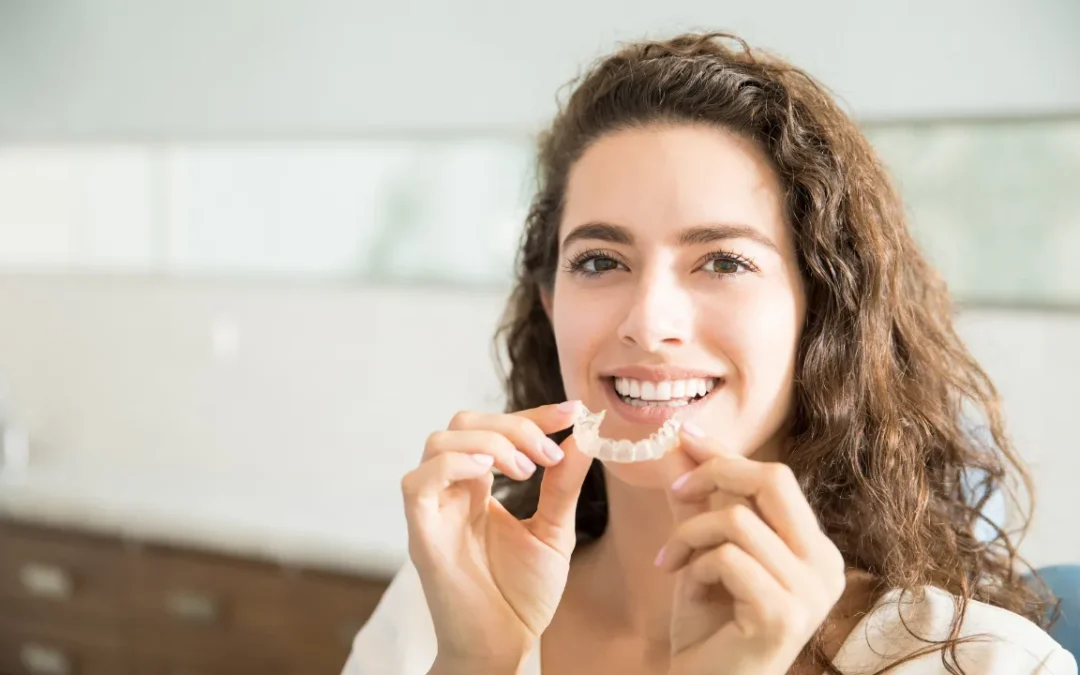
Many patients considering braces or clear aligners want to know one thing before starting treatment: How long will orthodontic treatment take? While treatment duration varies between individuals, orthodontic care generally follows a predictable sequence of clinical stages. Each phase serves a specific purpose, from diagnosing the underlying cause of misalignment to maintaining results after active treatment has finished.
Orthodontic tooth movement is a biological process that relies on controlled forces applied to teeth over time. Research shows that treatment outcomes depend on accurate diagnosis, careful treatment planning, patient compliance, and long-term retention following appliance removal. Understanding the orthodontic timeline helps patients know what to expect during each stage and why treatment often extends beyond simply straightening teeth.
Typical Orthodontic Treatment Timeline
Although every patient presents with unique orthodontic concerns, most treatment plans follow a similar progression. Mild alignment cases may be completed within a year, while moderate to severe malocclusions often require a longer treatment period.
| Treatment Stage | Typical Duration |
| Assessment and Diagnostic Planning | 1–3 weeks |
| Appliance Placement and Initiation | 1 appointment |
| Active Alignment and Levelling | 3–8 months |
| Bite Correction and Occlusal Optimisation | 6–12 months |
| Finishing and Refinement | 2–6 months |
| Retention Phase | Long-term |
Several factors influence treatment length, including the severity of crowding, spacing, jaw discrepancies, patient age, oral health status, and adherence to treatment instructions. Patients should view these timelines as general estimates rather than fixed treatment periods.
Stage 1: Orthodontic Assessment and Diagnostic Planning
Successful orthodontic treatment begins with a comprehensive assessment. Before any braces or aligners are provided, the dentist must evaluate tooth position, jaw relationships, facial proportions, oral health status, and functional concerns. This stage forms the foundation for all future treatment decisions.
A detailed diagnostic process helps identify the cause of the orthodontic problem rather than simply addressing visible tooth irregularities. Crowding, spacing, bite discrepancies, impacted teeth, skeletal imbalances, and habits such as thumb sucking may all contribute to malocclusion and require different treatment approaches.
Clinical Examination
The clinical examination provides the first opportunity to assess the patient’s orthodontic needs. During this appointment, the dentist evaluates both dental and facial characteristics to determine whether orthodontic treatment is appropriate and what outcomes can realistically be achieved.
Areas commonly assessed include:
- Tooth alignment
- Dental crowding
- Spacing between teeth
- Overbite and overjet
- Crossbite relationships
- Midline discrepancies
- Jaw function
- Facial symmetry
- Gum health
The examination also identifies existing dental conditions that may require treatment before orthodontic therapy begins. Active gum disease, untreated decay, or inadequate oral hygiene can compromise treatment outcomes and should be addressed first.
Diagnostic Records and Imaging
Orthodontic diagnosis relies heavily on objective records. Clinical findings alone cannot provide sufficient information for comprehensive treatment planning. Diagnostic records commonly include:
- Digital photographs
- Panoramic radiographs
- Cephalometric radiographs
- Digital intraoral scans
- Study models
- Bite registrations
These records allow the dentist to evaluate root position, tooth eruption patterns, bone support, skeletal relationships, and facial growth characteristics. Imaging also helps identify impacted teeth, missing teeth, root abnormalities, or pathology that may influence treatment decisions. Modern digital scanning technology has significantly improved treatment planning by providing highly accurate three-dimensional representations of the dentition without traditional impressions.
Individualised Treatment Planning
Once diagnostic information has been collected, a treatment plan is developed based on the patient’s specific clinical findings. Treatment planning involves determining:
- The most appropriate appliance type
- Estimated treatment duration
- Need for extractions
- Management of bite discrepancies
- Retention strategy
- Expected treatment limitations
At this stage, treatment objectives are clearly defined. Rather than focusing solely on straight teeth, orthodontic planning aims to achieve functional bite relationships, long-term stability, periodontal health, and facial harmony where appropriate.
Stage 2: Appliance Placement and Treatment Initiation
After treatment planning is complete, active orthodontic treatment begins. This stage involves the placement of braces or the delivery of clear aligners and marks the start of controlled tooth movement.
The initiation phase introduces orthodontic forces that stimulate biological changes within the supporting tissues surrounding each tooth. While visible changes may not occur immediately, important cellular responses begin shortly after force application.
Fixed Braces Placement
Fixed braces remain one of the most effective methods for managing a wide range of orthodontic problems. Brackets are bonded to the teeth and connected using orthodontic archwires that generate controlled forces. During appliance placement, the dentist:
- Bonds are attached to individual teeth
- Places the initial archwire
- Adjusts appliance components
- Provides oral hygiene instructions
- Reviews dietary recommendations
The initial archwire is typically selected to deliver gentle forces that minimise discomfort while initiating alignment. Patients may experience temporary soreness during the first few days as tissues adapt to the applied forces.
Clear Aligner Delivery
Clear aligner treatment follows a different delivery process. Instead of fixed appliances, patients receive a series of custom-manufactured aligners designed to move teeth incrementally. The delivery appointment generally includes:
- Assessment of aligner fit
- Attachment placement where required
- Instructions regarding wear time
- Guidance on aligner care
- Review of treatment expectations
Most aligner systems require wear for approximately 20 to 22 hours per day to maintain consistent force application and achieve planned tooth movement.
Early Biological Response to Tooth Movement
Orthodontic tooth movement occurs through a process known as bone remodelling. When force is applied to a tooth, pressure develops on one side of the periodontal ligament while tension develops on the opposite side. This biological response triggers:
- Bone resorption on the pressure side
- Bone formation on the tension side
- Periodontal ligament remodelling
- Cellular activation within surrounding tissues
Scientific studies have shown that orthodontic movement depends on this continuous remodelling cycle. Because biological responses vary between individuals, treatment speed can differ even when identical appliances are used.
Stage 3: Active Alignment and Levelling
The alignment and levelling phase focuses on correcting crowding, spacing, rotations, and irregular tooth positioning. This is often the stage during which patients begin noticing visible improvements in their smile. Although cosmetic changes can occur relatively early, significant biological processes continue beneath the surface as teeth move through bone into more favourable positions.
Correction of Crowding and Spacing
Crowding occurs when insufficient space exists within the dental arch to accommodate all teeth in proper alignment. Spacing develops when excess space is present between teeth.
During this stage, orthodontic appliances work to:
- Align rotated teeth
- Reduce crowding
- Close unwanted spaces
- Coordinate dental arches
- Improve arch form
The amount of correction required influences treatment duration. Mild crowding may respond quickly, whereas severe crowding often requires more extensive tooth movement.
Scheduled Orthodontic Adjustments
Regular review appointments are essential throughout active treatment. These visits allow the dentist to monitor progress and modify treatment mechanics as needed. Adjustment appointments may involve:
- Archwire changes
- Elastic replacement
- Appliance activation
- Progress evaluation
- Oral hygiene assessment
Consistent attendance is important because missed appointments can delay treatment progression and affect overall treatment efficiency.
Clinical Changes During Initial Tooth Movement
Many patients notice visible changes within the first few months of treatment. Rotated teeth often begin aligning early, while spacing and crowding may gradually improve. Common changes observed during this phase include:
- Improved tooth alignment
- Reduced crowding
- More symmetrical arch shape
- Improved smile appearance
Despite these early improvements, treatment remains incomplete. Additional stages are required to optimise bite function and ensure long-term stability.
Stage 4: Bite Correction and Occlusal Optimisation
Straight teeth alone do not guarantee a healthy bite. Once alignment has improved, treatment shifts toward correcting how the upper and lower teeth fit together during function. Proper occlusion supports efficient chewing, balanced force distribution, and long-term dental stability.
Managing Bite Relationships
Orthodontic treatment frequently addresses bite discrepancies such as:
- Overbite
- Increased overjet
- Underbite
- Crossbite
- Open bite
Correction of these relationships often requires more time than simple alignment because multiple teeth must move in a coordinated manner while maintaining arch stability. Improving bite relationships may also reduce excessive wear, improve chewing efficiency, and support overall oral function.
Use of Elastics and Auxiliary Appliances
Additional appliances are frequently used during bite correction. These may include:
- Interarch elastics
- Coil springs
- Power chains
- Bite turbos
- Temporary anchorage devices
Each auxiliary component serves a specific biomechanical purpose and helps guide teeth into their planned positions. Patient compliance becomes particularly important during this stage, especially when elastics are prescribed.
Clinical Objectives of Bite Correction
The primary goal of bite correction is to establish stable functional relationships between the upper and lower arches. Clinical objectives commonly include:
- Improved intercuspation
- Balanced bite contacts
- Functional jaw movement
- Reduced traumatic occlusion
- Long-term stability
Achieving these objectives often contributes significantly to overall treatment success and post-treatment retention.
Stage 5: Finishing and Treatment Refinement
As treatment approaches completion, attention shifts from major tooth movements to small adjustments that enhance both function and appearance. Although changes during this stage may appear subtle, refinement can significantly influence the outcome.
Detailed Tooth Positioning
Minor discrepancies in tooth angulation, rotation, and root positioning are corrected during finishing. This stage focuses on:
- Tooth angulation
- Root parallelism
- Contact relationships
- Midline correction
- Arch coordination
Careful finishing helps optimise both aesthetics and function.
Functional and Aesthetic Refinement
Orthodontic treatment should support oral function while achieving an attractive smile. Refinement procedures may involve:
- Fine-tuning bite contacts
- Improving smile symmetry
- Adjusting tooth positions
- Enhancing arch coordination
Small corrections made during this phase often yield substantial improvements in the final treatment quality.
Final Pre-Removal Assessment
Before braces or attachments are removed, a comprehensive evaluation is completed. The assessment typically includes:
- Occlusal analysis
- Alignment review
- Root position assessment
- Oral health evaluation
- Retention planning
Only when treatment objectives have been achieved should appliance removal proceed.
Stage 6: Retention and Long-Term Stability
Retention represents the final stage of orthodontic care and is essential for maintaining treatment results. Research consistently demonstrates that teeth possess a natural tendency to relapse after active treatment. Without retention, orthodontic corrections may gradually diminish over time.
Why Teeth Can Shift After Treatment
Several biological factors contribute to post-treatment movement. These include:
- Periodontal ligament memory
- Continued facial growth
- Occlusal forces
- Age-related changes
- Soft tissue pressures
The highest risk of relapse typically occurs during the first year after active treatment ends.
Fixed and Removable Retainers
Retainers help stabilise teeth while supporting tissues adapt to their new positions.
Common retention options include:
| Retainer Type | Characteristics |
| Fixed Retainer | Bonded behind teeth for continuous retention |
| Hawley Retainer | Removable acrylic and wire appliance |
| Clear Retainer | Transparent removable appliance |
The most appropriate retainer depends on the patient’s orthodontic history, treatment objectives, and long-term maintenance requirements.
Long-Term Retention Protocols
Current orthodontic evidence supports long-term retainer wear for maintaining treatment outcomes. Retention recommendations vary between patients, but many individuals benefit from continued retainer use well beyond the completion of active treatment. Long-term retention protocols generally involve:
- Full-time wear immediately after treatment
- Transition to nighttime wear
- Regular retainer reviews
- Replacement when necessary
Retention should be viewed as a continuation of orthodontic care rather than a separate phase. Maintaining alignment requires ongoing commitment, and long-term retainer compliance remains one of the most important factors influencing treatment stability.
Factors That Influence Orthodontic Treatment Duration
One of the most common misconceptions about orthodontic treatment is that every patient follows the same timeline. In reality, treatment duration varies considerably because tooth movement is influenced by biological, anatomical, behavioural, and treatment-related factors. Even patients with similar alignment concerns may experience different treatment lengths depending on how their teeth and supporting structures respond to orthodontic forces. Understanding these factors helps establish realistic expectations and highlights why personalised treatment planning remains essential throughout orthodontic care.
Complexity of Tooth and Jaw Relationships
The severity and nature of a patient’s orthodontic condition significantly influence treatment duration. Minor spacing or mild crowding often requires less tooth movement than complex bite discrepancies involving multiple dental arches.
Cases that typically require longer treatment include:
- Severe crowding
- Impacted teeth
- Significant overbite
- Underbite correction
- Crossbite correction
- Skeletal jaw discrepancies
- Multiple rotated teeth
- Asymmetrical bite relationships
For example, aligning mildly crowded front teeth may require only limited movement, whereas correcting a severe Class II or Class III malocclusion often involves coordinated movement of numerous teeth over an extended period. The complexity of treatment mechanics generally increases as bite discrepancies become more significant.
Age and Biological Response
Orthodontic treatment can be successful in both adolescents and adults. However, age may influence the biological rate of tooth movement and tissue adaptation. During adolescence, active growth can assist certain orthodontic corrections, particularly those involving jaw development and bite modification. Younger patients often demonstrate more rapid tissue remodelling, which may support efficient treatment progression. In adults, tooth movement remains predictable but may be influenced by:
- Reduced cellular activity
- Existing restorations
- Bone density variations
- Previous dental treatment
- Periodontal health
Importantly, age alone does not determine treatment success. Patient compliance and treatment complexity frequently have a greater impact on overall duration than chronological age.
Patient Compliance
Patient cooperation remains one of the most important factors affecting orthodontic treatment timelines. Successful treatment often requires:
- Attending scheduled appointments
- Following appliance instructions
- Wearing elastics as prescribed
- Maintaining aligner wear schedules
- Practising good oral hygiene
- Avoiding appliance damage
Research consistently demonstrates that non-compliance can prolong treatment and compromise outcomes. In clear aligner therapy, inconsistent wear is a particularly common cause of delayed progress because adequate force application depends on sufficient daily wear time. Orthodontic appliances can only perform as intended when treatment instructions are followed consistently.
Oral Health During Treatment
Healthy gums and supporting bone structures provide the biological environment necessary for predictable tooth movement. Poor oral health during treatment may result in:
- Gingival inflammation
- Plaque accumulation
- Decalcification
- Periodontal complications
- Increased treatment interruptions
Regular professional examinations and effective home care help minimise these risks while supporting efficient treatment progression. Patients who maintain healthy oral tissues throughout treatment are often better positioned to achieve their treatment goals within the expected timeframe.
Do Clear Aligners and Braces Follow the Same Treatment Timeline?
Both clear aligners and fixed braces aim to achieve similar orthodontic outcomes by applying controlled forces that move teeth into improved positions. Despite sharing the same biological principles, the treatment process and timelines may differ depending on case complexity, appliance selection, and patient compliance. Neither system is universally faster in all situations. The most appropriate option depends on the clinical requirements of the individual patient.
Key Similarities
Both treatment approaches involve the same fundamental biological process of bone remodelling and periodontal ligament adaptation. Common similarities include:
- Gradual tooth movement
- Scheduled review appointments
- Individualised treatment planning
- Retention requirements
- Ongoing monitoring
Regardless of the appliance selected, successful treatment depends on careful diagnosis and regular professional supervision.
Important Differences
While the biological mechanisms remain similar, appliance design influences how treatment is delivered.
| Treatment Characteristic | Fixed Braces | Clear Aligners |
| Appliance Type | Bonded to teeth | Removable |
| Compliance Requirement | Lower | Higher |
| Aesthetic Appearance | Visible | Nearly invisible |
| Eating Restrictions | Required | Minimal |
| Oral Hygiene Access | More challenging | Easier |
Fixed appliances provide continuous force because they remain attached to the teeth at all times. Clear aligners depend on patient compliance to maintain adequate treatment forces. This distinction often influences treatment efficiency.
Situations Where Treatment Length May Vary
Certain orthodontic conditions may respond differently depending on the treatment system selected. Treatment duration may vary when addressing:
- Severe crowding
- Complex bite discrepancies
- Significant tooth rotations
- Impacted teeth
- Vertical bite problems
For many mild to moderate alignment cases, treatment durations may be similar between braces and clear aligners. More complex orthodontic movements sometimes require additional treatment mechanics that are more effectively achieved with fixed appliances.
The most reliable way to estimate treatment duration is through a personalised orthodontic assessment rather than relying on general timelines.
Monitoring Treatment Progress Throughout Orthodontic Care
Orthodontic treatment requires continuous monitoring to ensure teeth are moving according to the planned sequence. Regular review appointments allow the dentist to evaluate biological responses, identify emerging issues, and make adjustments when necessary.
Monitoring is essential because tooth movement does not always occur exactly as predicted. Individual biological variation means treatment plans occasionally require modification during active care.
Clinical Indicators of Successful Tooth Movement
Orthodontic progress is evaluated using objective clinical measurements rather than visual appearance alone. Indicators commonly assessed include:
- Tooth alignment
- Arch coordination
- Bite relationships
- Root positioning
- Space closure progress
- Midline correction
Digital records and periodic clinical examinations help determine whether treatment objectives are being achieved as planned. Progress assessments also allow early detection of any deviations from the expected treatment pathway.
Changes Patients Commonly Notice
Patients often observe visible improvements before treatment is complete. Common observations include:
- Reduced crowding
- Improved smile symmetry
- Closure of spaces
- Better alignment of front teeth
- Improved bite comfort
Although these changes can be encouraging, visible improvements do not necessarily indicate that treatment objectives have been fully achieved. Bite optimisation and root positioning often continue long after initial alignment appears complete.
Factors That May Delay Progress
Several factors can influence treatment efficiency and lead to extended timelines. Potential causes of delay include:
- Missed appointments
- Broken brackets
- Lost aligners
- Poor elastic wear
- Inadequate oral hygiene
- Unexpected biological responses
Prompt management of these issues helps reduce the likelihood of prolonged treatment. Patients who communicate concerns early and attend scheduled reviews are generally better positioned to maintain treatment progress.
When Additional Clinical Review Is Required
Certain situations warrant additional assessment outside routine adjustment appointments. Examples include:
- Persistent appliance discomfort
- Loose brackets
- Damaged wires
- Lost retainers
- Poor aligner fit
- Unexpected tooth movement
Early intervention often prevents minor issues from developing into larger treatment complications.
Regular communication between the patient and the dental team supports efficient treatment progression and helps maintain planned timelines.
Frequently Asked Questions About Orthodontic Treatment Timelines
How long do braces usually stay on?
The duration of braces treatment varies according to the complexity of the orthodontic problem. Mild cases may require approximately 6 to 12 months, while moderate to complex cases often range from 18 to 36 months.
How quickly do teeth start moving after braces are fitted?
Biological changes begin shortly after orthodontic forces are applied. Visible tooth movement is often noticeable within the first several weeks, although the timing varies between individuals.
Why does orthodontic treatment take longer for some patients?
Treatment duration can be influenced by the severity of malocclusion, patient compliance, oral health status, biological response, and the need for complex bite correction.
Can orthodontic treatment be accelerated?
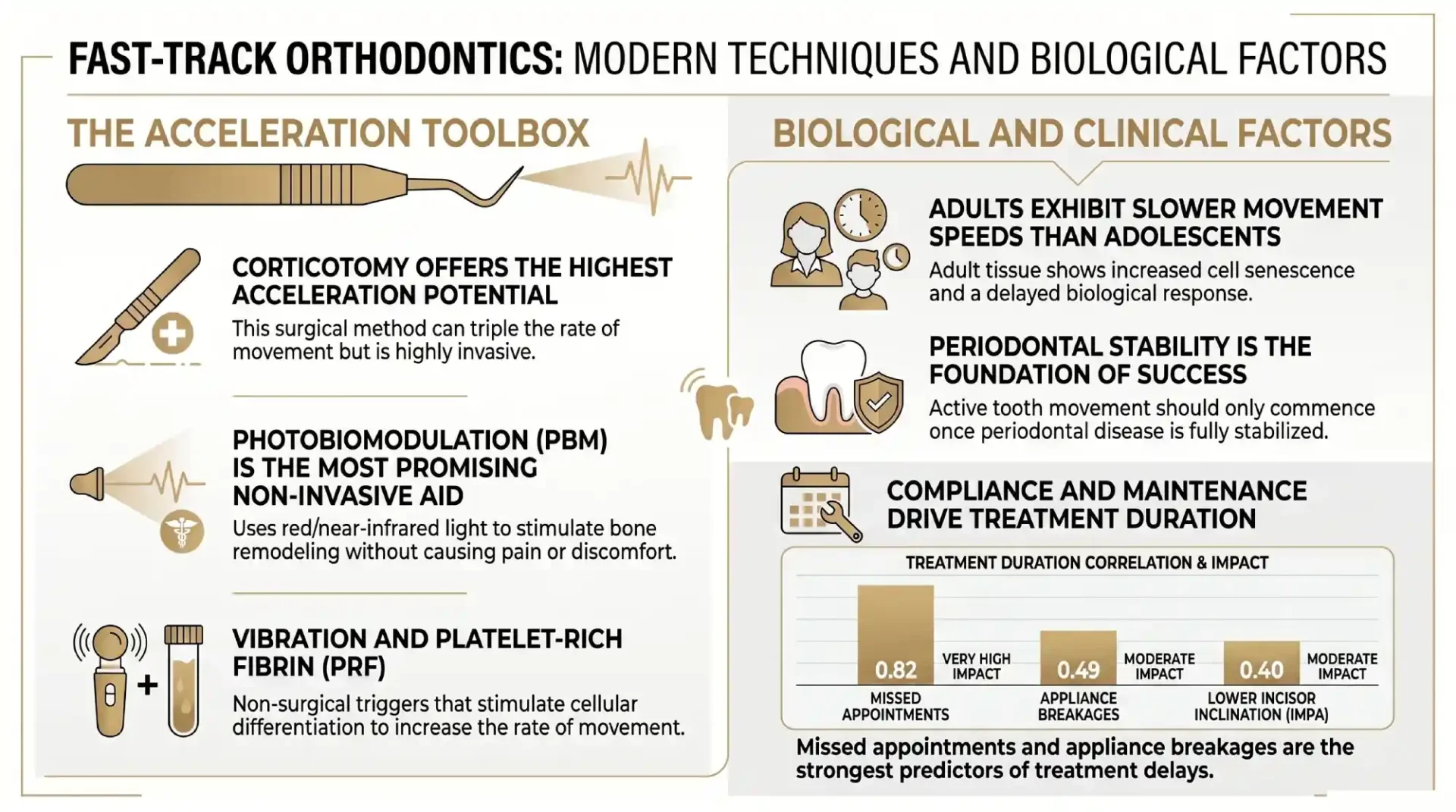
Some adjunctive techniques have been investigated for accelerating tooth movement. However, treatment should proceed at a biologically appropriate rate to minimise risks and maintain long-term stability.
How long must retainers be worn after treatment?
Current orthodontic evidence supports long-term retainer wear to maintain treatment results. Many patients benefit from ongoing nighttime retainer use after the initial retention period.
Does age affect orthodontic treatment duration?
Age may influence biological response, but treatment complexity and compliance often play a larger role in determining overall treatment length.
Key Takeaways
Orthodontic treatment follows a structured sequence that extends beyond simply straightening teeth. The process begins with comprehensive diagnosis and treatment planning, progresses through alignment and bite correction, and concludes with long-term retention aimed at preserving results.
Key points to remember include:
- Every orthodontic treatment plan follows a series of clinical stages.
- Treatment duration varies according to individual circumstances.
- Successful outcomes depend on accurate diagnosis and consistent monitoring.
- Patient compliance plays an important role in treatment efficiency.
- Retention remains essential for maintaining long-term stability.
- Both braces and clear aligners can provide effective orthodontic correction when used appropriately.
A personalised orthodontic assessment remains the most reliable way to determine treatment duration, identify suitable treatment options, and establish realistic expectations for your smile transformation.

Those who desire to look better—teenagers and adults—often receive dental work. Children should also begin visiting the dentist early on, Read more

In the world of orthodontics, Invisalign has emerged as a revolutionary alternative to traditional metal braces. This advanced treatment offers Read more
Choosing the right dentist is one of the most important healthcare decisions you’ll make. Whether you're in need of routine Read more
Overcrowded teeth can affect more than just your smile; they may lead to difficulty cleaning teeth, increased risk of tooth Read more