
Dental implants are more than just a solution for missing teeth; they play a crucial role in preserving jawbone health and preventing bone loss. If you’ve ever wondered why your dentist recommends implants over traditional dentures or bridges, understanding how dental implants work can provide insight into the significant advantages they offer. In this post, we will dive deep into how dental implants prevent bone loss, their benefits for your oral health, and why they’re considered the gold standard for tooth replacement.
What is Bone Loss and Why Does It Happen?
Bone loss, also known as bone resorption, is a process where the body breaks down bone tissue, leading to a decrease in bone density. This process typically occurs in the jawbone after tooth loss. When a tooth is missing, the jawbone no longer receives the necessary stimulation that is provided by the tooth root during chewing. Over time, this lack of stimulation causes the bone to deteriorate, leading to bone loss. Bone resorption is a silent process; many patients don’t realise that even broken teeth can cause health problems if left untreated, as the lack of structural integrity begins to compromise the surrounding jawbone.
Bone Resorption and Tooth Loss
When a tooth is lost, the root no longer stimulates the surrounding jawbone through biting and chewing. As a result, the bone begins to break down and weaken. This can affect the structure of the face, leading to sunken cheeks, thinning lips, and even a collapsed jawline. Bone resorption is most noticeable in the lower jaw, where it can alter the shape of your face over time.
Factors Contributing to Bone Loss
While the primary cause of bone loss is tooth loss, other factors can accelerate the process. These include:
- Gum disease: Periodontal disease can lead to both tooth loss and bone loss.
- Osteoporosis: A condition that weakens bones and increases the likelihood of bone loss in the jaw.
- Poor oral hygiene: Neglecting proper oral care can lead to tooth decay and gum infections, both of which contribute to bone loss.
- Smoking: Smoking reduces blood flow to the gums, increasing the risk of gum disease and bone resorption.
Bone loss not only affects the appearance of your face but can also impair the ability to chew properly, leading to difficulties with eating and speaking.
How Dental Implants Prevent Bone Loss and Preserve Jaw Health
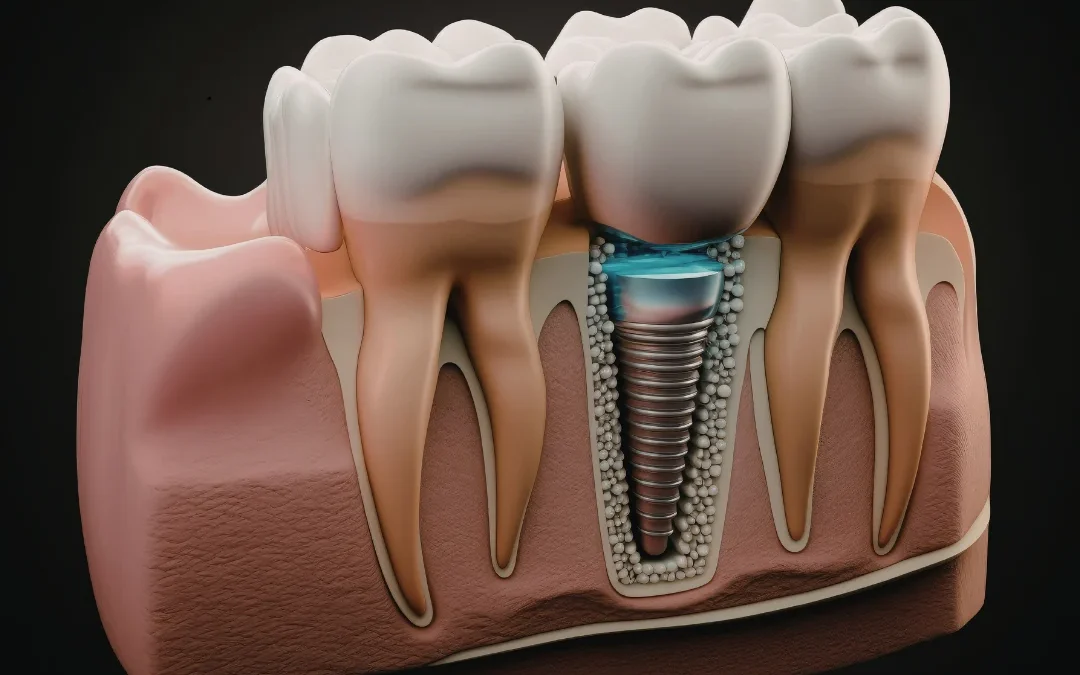
Dental implants are titanium posts that are surgically placed into the jawbone to replace the roots of missing teeth. They are the most advanced solution available for replacing missing teeth and preventing the bone loss that typically follows tooth extraction. Unlike traditional dentures or bridges, dental implants provide the necessary stimulation to the jawbone, helping to preserve bone density and maintain the overall structure of your face.
What Are Dental Implants?
Dental implants are composed of three main parts:
- Titanium Post: A screw-like post that is placed into the jawbone. Titanium is used because of its ability to integrate with bone tissue through a process called osseointegration.
- Abutment: A connector that sits on top of the titanium post, holding the artificial tooth (crown) in place.
- Crown: The visible part of the implant that functions and looks like a natural tooth.
Once the titanium post is placed into the jawbone, it fuses with the bone during the healing process. This creates a secure, permanent foundation for the replacement tooth. This fusion process is what makes dental implants different from traditional dental solutions, as they prevent bone loss by stimulating the jawbone.
How Dental Implants Work to Prevent Bone Loss
Dental implants act as artificial tooth roots. They are placed directly into the jawbone, where they provide the same stimulation that natural tooth roots do when we chew. This stimulation signals to the body that the bone needs to remain healthy and intact. As a result, bone resorption is halted, and the jawbone remains dense and strong.
The process that makes dental implants effective in preventing bone loss is called osseointegration. During osseointegration, the titanium post bonds with the jawbone, creating a solid and long-lasting foundation. This integration prevents the bone from deteriorating and ensures that the jawbone retains its natural structure. Without the presence of implants, the bone would continue to shrink, which can cause further tooth loss and affect facial appearance.
Dental implants provide a long-term solution for bone preservation, unlike traditional dentures, which sit on top of the gums and do not stimulate the bone beneath. Without that stimulation, the jawbone continues to weaken over time, leading to further bone loss. The success of dental implants lies in the three-part harmony of the titanium post, abutment, and crown working together to mimic a natural tooth.
The Benefits of Dental Implants Beyond Bone Preservation
While the primary advantage of dental implants is their ability to prevent bone loss, there are many additional benefits that make them the ideal solution for missing teeth.
1. Restoration of Functionality
Dental implants restore both the functionality and aesthetics of your teeth. With a crown placed on top of the titanium post, implants mimic the appearance, feel, and function of natural teeth. This allows patients to chew, speak, and smile confidently once again.
2. Improved Facial Aesthetics
When bone loss occurs, it can change the shape of your face, leading to a sunken or prematurely aged look. Dental implants prevent this by stimulating the jawbone and preserving the natural contours of your face. This helps maintain your facial structure, improving your overall appearance.
3. Durability and Long-Term Oral Health
Dental implants are a durable, long-term solution for tooth replacement. With proper care, they can last a lifetime. Unlike dentures or bridges, which need to be replaced every few years, dental implants are designed to stay in place permanently, providing lasting benefits for both your oral health and appearance.
Dental Implant Procedure: What to Expect
If you’re considering dental implants, understanding the procedure can help ease any concerns and prepare you for the journey ahead. Unlike traditional tooth replacement options, the dental implant process is a multi-step procedure that requires careful planning and skilled execution. Let’s take a closer look at what happens during each stage of the implant process.
Initial Consultation and Assessment
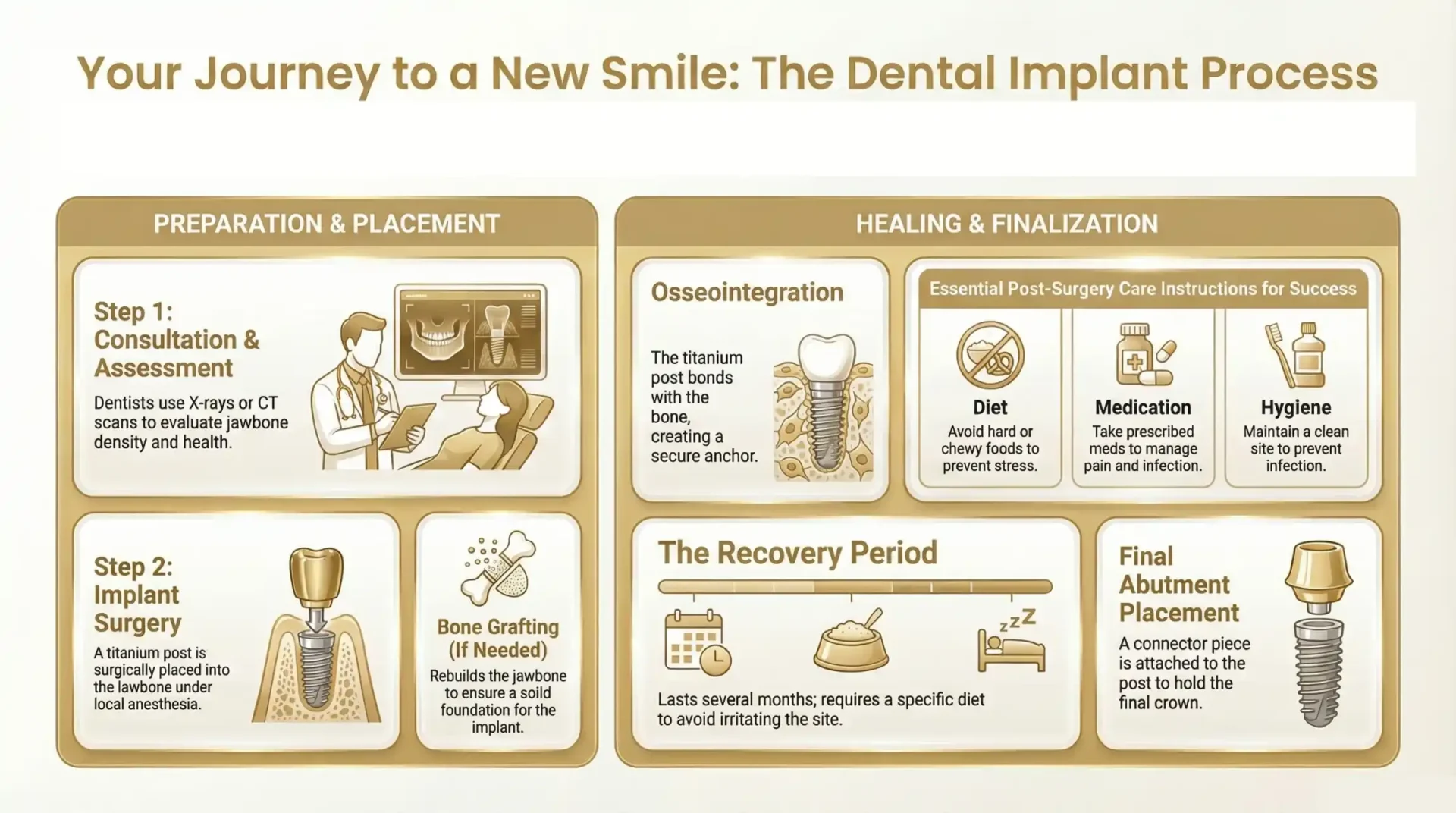
The first step in getting dental implants is a consultation with a dental professional. During this visit, your dentist will conduct a thorough examination of your oral health and discuss your goals for tooth replacement. They will typically use diagnostic tools such as X-rays or CT scans to assess the condition of your jawbone and determine if you have enough bone density for implant placement.
If necessary, your dentist may recommend additional procedures like bone grafting to enhance the volume of your jawbone. Bone grafting is a medical procedure used to rebuild areas of the jaw that have experienced significant bone loss, ensuring a solid foundation for the dental implant.
Implant Surgery
Once your dentist has evaluated your case and determined you’re a suitable candidate for implants, the next step is the surgical procedure. The dental implant surgery involves placing a titanium post (implant) into the jawbone where the missing tooth root once was.
The surgery is typically performed under local anesthesia, which numbs the area around the implant site. In some cases, sedation may be offered for patients who are anxious or prefer a more relaxed experience. The implant is carefully placed into the bone, and the surrounding tissue is sutured closed.
After the implant is placed, the healing process begins. This is when osseointegration occurs, where the titanium post bonds with the bone, creating a secure anchor for the artificial tooth.
Recovery and Aftercare
Following implant surgery, the recovery time can vary from patient to patient, but generally, it takes several months for osseointegration to fully occur. During this period, your dentist will schedule follow-up appointments to monitor the healing process and ensure that everything is progressing as expected. To ensure osseointegration is successful, following a specific recovery diet is essential; learn more about what to eat after dental implant surgery to avoid irritating the surgical site.
Post-surgery care is critical to the success of your implant. Your dentist will provide detailed instructions on how to care for your mouth during recovery, which may include:
- Avoiding hard or chewy foods to prevent stress on the implant site.
- Taking prescribed medications to manage pain and reduce the risk of infection.
- Maintaining good oral hygiene to ensure the site remains clean and free from infection.
Once the implant has integrated with the jawbone, you will return to your dentist to have the abutment (a connector piece) placed on top of the implant post. This abutment will hold the final crown in place.
Factors That Influence the Success of Dental Implants
While dental implants are a highly effective solution for tooth replacement, their success depends on several factors, including your overall oral health, lifestyle, and the expertise of the implant specialist. Let’s dive into some of the key factors that influence the success of dental implants.
Bone Density and Bone Grafting
One of the most critical factors in the success of dental implants is the density of your jawbone. A healthy, strong jawbone provides the ideal environment for osseointegration to occur, ensuring the implant remains secure and stable.
If you have suffered significant bone loss, your dentist may recommend bone grafting to enhance your jawbone before placing the implant. This procedure involves adding bone material to the jaw to improve its volume and density, providing a solid foundation for the implant.
In some cases, additional procedures like sinus lifts or Pterygoid implants may be necessary to support implant placement, especially in the upper jaw or areas with extensive bone loss. During your assessment, your dentist will determine if an implant is the best path or if an alternative treatment to repair a damaged tooth is more appropriate for your current bone density.
Smoking, Oral Hygiene, and Lifestyle Factors
Smoking is one of the leading causes of dental implant failure. The chemicals in cigarettes reduce blood flow to the gums, which can impair healing and increase the risk of infection. If you’re a smoker, it’s essential to quit before undergoing implant surgery and during the recovery period to ensure optimal results.
Good oral hygiene is also vital for implant success. Keeping the area around your implants clean and free from bacteria will help prevent infections like peri-implantitis, an infection that affects the tissue around the implant. Regular brushing, flossing, and dental check-ups are crucial for the long-term health of your implants.
In addition, maintaining a balanced diet rich in nutrients like calcium and vitamin D can help support bone health and ensure that your implants remain secure for years to come.
Expertise in Implant Placement
The success of your dental implant is largely dependent on the skill of the implant specialist performing the procedure. An experienced dental surgeon will be able to accurately place the implant in the optimal location, ensuring that it integrates properly with the bone and avoids complications.
It’s crucial to choose a qualified and experienced dentist or oral surgeon who has a track record of successful dental implant procedures. At St Leonards Dental, our experienced team of professionals is trained in the latest implant techniques, ensuring that your dental implant procedure is safe, effective, and successful.
The Advantages of Dental Implants Over Other Tooth Replacement Options
Dental implants offer a range of benefits that make them the preferred choice for replacing missing teeth. Let’s compare dental implants to other traditional options like bridges and dentures, highlighting the unique advantages of implants.
Dental Implants vs. Bridges and Dentures
While dental bridges and dentures are popular alternatives for replacing missing teeth, they do not provide the same level of benefits as dental implants, especially when it comes to bone preservation.
- Bone Preservation: Unlike dentures and bridges, which sit on top of the gums, dental implants are placed directly into the jawbone. This provides the necessary stimulation to the bone, preventing bone resorption and maintaining jawbone health.
- Long-Term Durability: Dental implants are designed to last a lifetime with proper care, whereas bridges and dentures typically need to be replaced every 5-10 years.
- Natural Look and Feel: Dental implants look and function just like natural teeth. Unlike dentures, which can slip or cause discomfort, implants provide a secure fit that allows you to speak, chew, and smile with confidence.
- Preservation of Surrounding Teeth: With dental implants, the surrounding teeth do not need to be altered or trimmed, unlike bridges, which require the adjacent teeth to be filed down.
Long-Term Aesthetic and Functional Benefits
In addition to preventing bone loss, dental implants offer significant aesthetic and functional advantages. They restore your smile, improve your ability to chew, and enhance your overall facial structure.
- Facial Structure: When bone loss occurs, it can lead to a sunken appearance in the face. Dental implants help preserve the natural contours of the face by maintaining jawbone density.
- Improved Chewing Function: Unlike dentures, which can shift and cause discomfort while eating, dental implants allow you to enjoy your favourite foods with ease and confidence.
- Self-Confidence: Dental implants can restore not just your smile but your self-esteem. With a secure, natural-looking tooth replacement, you’ll feel more comfortable and confident in social settings.
Preventing Implant Failure: Key Considerations for Success
Dental implants are a reliable and long-lasting solution for replacing missing teeth, but like any medical procedure, they come with some risks. However, with proper care and attention, these risks can be minimised, and the success of the implants can be ensured for years to come. Let’s explore some of the common causes of implant failure and how to prevent them.
Peri-implantitis and Implant Failure
One of the most common complications associated with dental implants is peri-implantitis, an infection that affects the tissue surrounding the implant. Similar to gum disease, peri-implantitis can cause inflammation, infection, and even bone loss around the implant. If left untreated, it can lead to implant failure.
To prevent peri-implantitis:
- Maintain Excellent Oral Hygiene: Brushing twice a day and flossing around the implant can help prevent the buildup of plaque and bacteria.
- Regular Dental Check-Ups: Regular visits to your dentist are essential for monitoring the health of your implants. Your dentist will check for any signs of infection or gum disease and can treat them early.
- Quit Smoking: Smoking increases the risk of infection and slows down the healing process, making smokers more prone to complications. If you’re considering dental implants, quitting smoking can significantly improve your chances of success.
Maintaining Oral Hygiene and Regular Checkups
One of the most effective ways to ensure the longevity of your dental implants is to practice good oral hygiene. This includes:
- Brushing and Flossing: Use a soft-bristle toothbrush to gently clean around the implants. Special tools, such as interdental brushes or water flossers, can also be used to clean around implants more effectively.
- Avoiding Hard Foods: Immediately after the implant procedure, avoid chewing hard foods that could put undue stress on the implant site. Once healed, continue to eat a balanced diet that supports overall oral and bone health.
- Regular Checkups: Routine checkups and cleanings with your dentist ensure that any issues, such as infection or bone loss, are detected early. Your dentist will also monitor the stability of your implant and make adjustments if needed.
Nerve Damage and Other Risks
In some cases, dental implant placement can result in nerve damage. This can cause symptoms like numbness, tingling, or discomfort in the gums, lips, or chin. Though rare, nerve damage can occur if the implant is placed too close to the nerves in the jawbone.
To reduce the risk of nerve damage, ensure that you choose an experienced dental implant surgeon who uses advanced imaging techniques, such as 3D scans, to plan the placement of the implants accurately.
Alternatives to Dental Implants
While dental implants are the most effective solution for tooth replacement, they are not always suitable for every patient. In some cases, patients may need alternatives. Let’s look at some of these alternatives and when they might be used.
Bone Grafting and Sinus Lifts
For patients who have significant bone loss in the jaw, bone grafting is often required to build up the bone before placing an implant. Bone grafting involves taking bone material from another part of the body (or using synthetic bone material) and grafting it onto the jawbone.
Similarly, a sinus lift may be required for patients with insufficient bone in the upper jaw, especially in the back region. This procedure involves lifting the sinus membrane to allow for bone grafting and implant placement.
These procedures can add time to the overall implant process but are effective in ensuring that there is enough bone to support dental implants.
All-on-4® and Other Implant Systems
For patients with severe bone loss, the All-on-4® system is a revolutionary solution that allows for the placement of four implants in the jaw, which support a full set of teeth. This method minimises the need for bone grafting and provides a quicker recovery time compared to traditional implant techniques.
Additionally, Pterygoid implants and Zygomatic implants are options for patients who may not have enough bone in the upper jaw to support regular implants. These implants are placed in the cheekbones and are particularly useful for patients with significant bone loss in the upper jaw.
Frequently Asked Questions
How long do dental implants last?
Dental implants can last a lifetime with proper care. The titanium post itself is durable and doesn’t decay like natural teeth. However, the crown may need to be replaced after 10-15 years due to wear and tear.
Can dental implants prevent bone loss forever?
While dental implants are highly effective at preventing further bone loss, they require proper care and maintenance to ensure they remain healthy. Poor oral hygiene or neglect can still lead to complications.
What happens if I don’t get dental implants after tooth loss?
If dental implants are not placed, bone loss will continue in the area where the tooth is missing. This can lead to further tooth loss, difficulty with chewing, and changes to the shape of your face.
How painful is the dental implant procedure?
Most patients report minimal discomfort during the implant procedure, thanks to local anesthesia. After the procedure, some soreness may occur, but this can typically be managed with over-the-counter pain relief.
Are dental implants right for everyone?
While dental implants are suitable for most people, they may not be appropriate for individuals with certain health conditions, such as advanced gum disease or osteoporosis. A consultation with a qualified dentist is essential to determine if implants are the right choice for you.
The Long-Term Benefits of Choosing Dental Implants
In conclusion, dental implants offer a reliable, long-lasting solution for replacing missing teeth and preventing bone loss. They provide a natural look and feel, restore functionality, and help maintain the overall structure of your face. Not only do they preserve bone health, but they also offer superior comfort, durability, and aesthetic benefits compared to traditional dentures or bridges.
If you’re struggling with tooth loss or bone resorption, dental implants could be the right solution for you. At St Leonards Dental, we specialise in helping patients restore their smiles and oral health with advanced dental implant procedures. Our experienced team is here to guide you through every step of the process, ensuring you receive the highest level of care and expertise.
Are you ready to take the next step towards a healthier smile? Contact St Leonards Dental today to schedule your free consultation. Our friendly team will assess your individual needs and help you understand how dental implants can improve your oral health and prevent bone loss.


Dental implants are a permanent solution to missing teeth and they have a success rate of up to 95%. When Read more

Missing teeth can affect how you eat, speak, and feel about your smile. Many people delay treatment because they expect Read more