
If you have just discovered a cavity or have an old filling that feels a bit rough, you might be wondering which material is the right choice for your smile. In the past, the options were limited, but modern dentistry in Australia now offers a variety of solutions that can be matched to your specific needs, budget, and aesthetic goals. A dental filling does more than just plug a hole; it restores the structural integrity of your tooth and seals out bacteria to prevent painful infections. Whether you need a simple fix for a front tooth or a heavy-duty restoration for a molar, understanding the differences between direct and indirect fillings is the first step toward making an informed decision for your oral health.
What Are Dental Fillings?
Dental fillings are materials used by dentists to fill cavities or holes in your teeth caused by decay. When a tooth is decayed or damaged, a dentist will remove the affected part and fill it with a material that restores the tooth’s shape, function, and strength. This procedure helps prevent further decay and protects the tooth from future damage. Fillings are necessary for anyone who has cavities caused by tooth decay, and they come in several types. The main goal of a filling is not only to restore the tooth but also to help you maintain oral health, reduce pain, and improve your smile.
Why Are Fillings Needed?
When cavities are left untreated, they can grow larger and cause more severe damage to your tooth. This can lead to infections, tooth loss, or the need for more invasive procedures like root canals. Getting a filling early can save you from these problems. Fillings are also used to treat teeth that are cracked or broken due to injury or wear.
Direct Fillings: Restorations Completed in a Single Visit
Direct fillings are the most common type of dental restoration used at St Leonards Green Dental. As the name suggests, these are placed “directly” into your tooth during a single appointment. The dentist removes the decay, cleans the area, and then packs the material into the cavity before it hardens. This method is efficient and highly effective for small to medium-sized cavities. Because these materials are applied chairside, they are generally the most cost-effective option for Australian families. Depending on the location of the cavity and your lifestyle, we can choose from several specialized materials to ensure your filling looks natural and lasts for years.
Composite Resin Fillings (Tooth-Coloured)
Composite resin is currently the most popular choice for dental fillings across Australia because it mimics the natural appearance of tooth enamel. Made from a mixture of plastic and fine glass particles, these fillings can be custom-shaded to match your existing teeth perfectly. Beyond aesthetics, composite resin chemically bonds to the tooth structure, which actually helps support the remaining enamel and prevents the tooth from breaking. Because they bond so well, the dentist often has to remove less of your healthy tooth during preparation compared to older methods. While they are slightly more prone to staining from coffee or red wine over many years, they remain the gold standard for a seamless, beautiful smile.
Dental Amalgam (Silver Fillings)
Dental amalgam has been a staple of restorative dentistry for over 150 years due to its incredible strength and durability. Often called “silver fillings,” this material is a blend of metals, including silver, tin, copper, and mercury. While their dark appearance makes them less popular for front teeth, they are exceptionally resistant to wear and can withstand the heavy chewing forces of your back molars. While sensitivity is common after a procedure, our use of white dental fillings helps mimic natural tooth structure and minimizes the removal of healthy enamel. In Australia, the use of amalgam is strictly regulated, and modern pre-dosed capsules ensure the highest safety standards. For many patients, the lower cost and long lifespan (often 10 to 15 years or more) make amalgam a practical and reliable choice for large cavities in the back of the mouth.
Glass Ionomer Cement (GIC)
Glass ionomer is a unique material that acts as both a filling and a protective treatment. It is primarily made from acrylic acids and fine glass powders that have the special ability to release fluoride into the surrounding tooth over time. This fluoride release helps to strengthen the enamel and prevent further decay, making GIC the “hero” material for children’s baby teeth or for cavities located along the sensitive gum line. While it is not as strong as composite or amalgam and is usually reserved for low-pressure areas, its ability to bond chemically to the tooth in moist environments makes it an invaluable tool for specific dental needs.
Compomers
Compomers are a hybrid material that combines the aesthetic and strength benefits of composite resin with the fluoride-releasing properties of glass ionomer. These are often used as a middle-ground solution for patients who have a high risk of developing new cavities but still want a tooth-coloured restoration. Compomers are frequently utilized in pediatric dentistry or for restorations in areas where both durability and cavity protection are needed. While not as common as standard composites, they offer a specialized alternative for maintaining long-term oral health in challenging cases.
Indirect Fillings: The Heavy-Duty Options
When a cavity is too large for a standard direct filling but not quite damaged enough to require a full dental crown, we often recommend indirect restorations. These are custom-crafted outside of your mouth, either in a specialized dental laboratory or using advanced on-site milling technology, and then bonded to your tooth in a separate step. Because they are made from high-strength materials like solid ceramic or gold, they offer structural support that direct resin cannot match. For many patients in St Leonards, these are viewed as a long-term investment, providing a durable “cap” for the biting surface of the tooth while preserving as much of your natural enamel as possible.
Ceramic/Porcelain Fillings (Inlays and Onlays)
Ceramic fillings, often referred to as inlays or onlays, are the premium choice for patients seeking both maximum strength and perfect aesthetics. Unlike composite resin, which is applied in layers and cured with a light, ceramic restorations are milled from a single block of high-quality porcelain. This makes them incredibly resistant to the heavy “grinding” forces of your back molars and virtually immune to staining from dark liquids. An “inlay” fits within the grooves of your tooth, while an “onlay” (sometimes called a partial crown) covers one or more of the tooth’s cusps. While they require two appointments to complete, their lifespan often exceeds 15 years, making them one of the most reliable ways to fix a large cavity.
Cast Gold Fillings
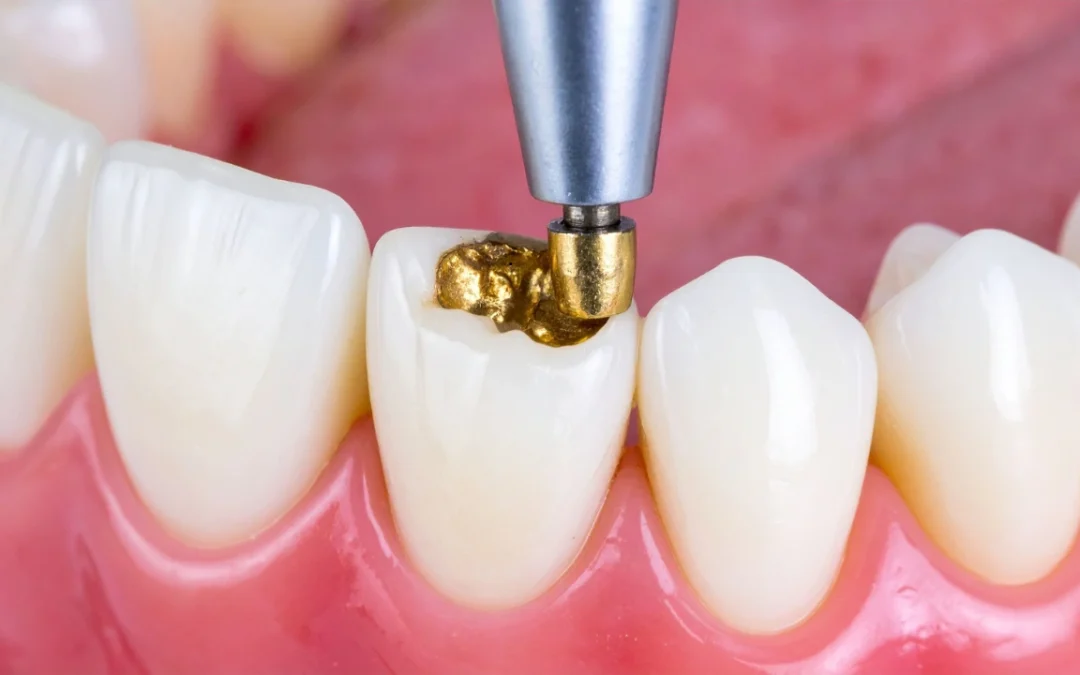
While gold may not match the natural white of your teeth, it remains the “gold standard” in dental circles for its unmatched physical properties. Gold alloys are incredibly biocompatible, meaning they are very gentle on the surrounding gum tissue and rarely cause allergic reactions. Patients often experience ‘zingers’ after a session, but opting for professional teeth whitening ensures the treatment is applied safely to minimize nerve irritation. Most importantly, gold has a similar rate of expansion and contraction as natural human enamel, which prevents the tooth from cracking over decades of use. A well-maintained gold filling can easily last 20 to 30 years, often outliving the patient’s other restorations. For a back molar that is hidden from view, gold provides a “set it and forget it”, virtually indestructible solution.
Comparison: Direct vs. Indirect Fillings
To help you weigh your options, it is useful to look at the practical differences in cost, time, and expected longevity. While direct fillings offer immediate results and a lower upfront price, indirect restorations often provide better value over a lifetime because they need to be replaced much less frequently.
| Feature | Direct (Composite/Amalgam) | Indirect (Ceramic/Gold) |
| Appointments | 1 Visit | 2 Visits |
| Typical Lifespan | 5–10 Years | 15–20+ Years |
| Cost (Estimate) | $180 – $450 | $1,200 – $2,500 |
| Best For | Small to medium cavities | Large cavities/heavy bite pressure |
| Stain Resistance | Moderate | High (Ceramic) / N/A (Gold) |
Which Type of Filling Is Right for Your Tooth?
Selecting a filling material is not a “one size fits all” process; it is a clinical decision based on where the tooth is located and how much pressure it handles every day. During your consultation at St Leonards Green Dental, we evaluate the structural integrity of the remaining tooth and listen to your priorities regarding budget and appearance. A material that works perfectly for a small chip on a front tooth might fail within months if placed on a heavy-chewing molar. By matching the physical properties of the material to the biological needs of the tooth, we ensure your restoration doesn’t just look good today but remains functional for the next decade.
Front Teeth (Anterior)
For teeth that are visible when you smile, aesthetics are the primary concern. We almost exclusively use high-grade composite resins or ceramic veneers for front teeth because they allow us to mimic the translucency and “light-play” of natural enamel. Modern composites come in dozens of different shades, allowing us to layer the material so that the filling is completely invisible to the naked eye. Because front teeth don’t endure the same crushing pressure as molars, the slightly lower wear resistance of composite is a fair trade-off for a perfect cosmetic result.
Back Teeth (Posterior)
Your molars are the workhorses of your mouth, enduring hundreds of kilograms of pressure every time you chew. For these teeth, we prioritize strength and “marginal integrity”—the seal between the filling and the tooth. For smaller cavities, a bulk-fill composite or a durable amalgam is often sufficient. However, for larger cavities or for patients who grind their teeth, we often lean toward ceramic onlays or gold. These materials reinforce the tooth and prevent it from splitting under pressure, which is a common risk when using large direct fillings in the back of the mouth.
The Size of the Cavity
As a general rule, the larger the cavity, the “stronger” the material needs to be. A small hole can be easily supported by a direct composite filling. However, once a cavity takes up more than half the width of the tooth, the remaining natural structure becomes weak and brittle. In these cases, a standard filling can act like a “wedge,” eventually causing the tooth to crack. This is the point where we transition from a simple filling to an indirect onlay or a full crown. Our goal is always to be as conservative as possible, saving your natural tooth structure while ensuring the final result is strong enough to last.
What to Expect During and After Your Filling Procedure
For many Australians, the thought of a dental filling brings up images of long appointments and loud drills, but modern dentistry has made the process faster and more comfortable than ever. A standard filling for a small to medium cavity usually takes between 30 and 45 minutes from start to finish. At St Leonards Green Dental, we focus on a pain-free experience by ensuring the area is completely numb before we begin. Most of the “scary” part, the drilling, actually only lasts for a minute or two as we carefully clear away the soft, decayed portion of the tooth to prepare a clean surface for the filling material.
The Step-by-Step Restoration Process
The procedure begins with a local anaesthetic to numb the tooth and the surrounding gums. Once you are comfortable, the dentist uses a specialised drill or laser to remove the decayed enamel. After the cavity is cleaned and dried, the area is “prepped” with a mild etching gel that creates a rough surface for the filling to grip onto. For composite fillings, the resin is applied in thin layers, with each layer being hardened instantly by a bright blue curing light. Finally, the dentist shapes the material to match your tooth’s natural anatomy and checks your bite with a thin piece of articulating paper to ensure the filling doesn’t feel “high” when you chew.
Why Some Fillings Fail
While dental materials are stronger than ever, they are not invincible. The most common reason for filling failure is “marginal leakage,” which happens when the bond between the filling and the tooth begins to pull away or wear down. This creates a microscopic gap where bacteria can hide, leading to what dentists call “secondary caries”, a new cavity forming underneath the old filling. Other common causes of failure include physical fractures from biting on something very hard (like a stray olive pip) or the constant pressure of nighttime teeth grinding. Regular check-ups are vital because we can often spot these tiny leaks with an X-ray or a high-powered intraoral camera before they turn into a painful toothache.
Longevity Secrets: How to Make Your Fillings Last 10+ Years
You have a huge amount of control over how long your dental work lasts. The best way to protect your investment is to maintain a strict routine of brushing and flossing, especially around the edges of the filling where plaque likes to accumulate. If you are a known “grinder,” wearing a custom night guard is the single most important thing you can do to prevent your fillings from cracking under pressure. Additionally, try to avoid “using your teeth as tools” to open packages or bite your nails. With good hygiene and regular professional cleans to remove hardened tartar, it is entirely possible for a high-quality filling to remain functional and beautiful for a decade or more. A professional scale and clean is essential for gum health, though it can leave your teeth feeling a bit ‘naked’ for 24 hours.
Frequently Asked Questions About Dental Fillings
What is the safest type of filling?
In Australia, all dental materials approved by the Therapeutic Goods Administration (TGA) are considered safe. While some people worry about the mercury in silver amalgam fillings, the Australian Dental Association (ADA) confirms that once the mercury is mixed with the other metals, it forms a stable solid that is safe for the general population.
How much do different types of fillings cost in Australia?
The cost of a filling in 2026 typically depends on the size of the cavity and the material used. A simple, single-surface composite filling in Sydney usually ranges from $180 to $350. If the cavity is larger and involves multiple surfaces of the tooth, the price may increase to $450 or more. Indirect fillings like ceramic inlays are more expensive (ranging from $1,200 to $2,000) because they involve laboratory fees and multiple appointments, but they offer much higher durability.
Can I replace my old silver fillings with white ones?
Yes, many patients choose to replace their old amalgam fillings with white composite or ceramic for aesthetic reasons. This not only improves the look of your smile but also allows us to check for any hidden decay that might have started at the edges of the old silver filling.
Which filling material lasts the longest?
If longevity is your only goal, cast gold is the winner, often lasting 20 to 30 years. Among the more common options, silver amalgam and ceramic inlays typically last 10 to 15 years, while standard composite resin usually lasts between 5 and 10 years. The location of the tooth also matters; a filling on a flat chewing surface will generally wear down faster than one on the side of a tooth.
Does the type of filling affect sensitivity?
Some patients experience temporary sensitivity to hot or cold after a filling, regardless of the material. However, metal fillings (like amalgam and gold) conduct temperature faster than composite or ceramic, which act more like natural insulation. If you have naturally sensitive teeth, a composite or ceramic restoration might be more comfortable for you in the long run.
Conclusion: Tailoring Your Restoration to Your Life
Choosing the right type of filling is a balance between your dental needs, your aesthetic preferences, and your budget. Whether you opt for the invisible beauty of composite resin, the rugged durability of amalgam, or the long-term strength of a ceramic inlay, the most important factor is catching decay early. At St Leonards Green Dental, we utilise the latest diagnostic tools to detect cavities at an early stage, enabling simpler, more conservative fillings that preserve your natural tooth.
Tooth fillings are a common dental procedure used to restore teeth damaged by decay, and while they often provide lasting Read more