
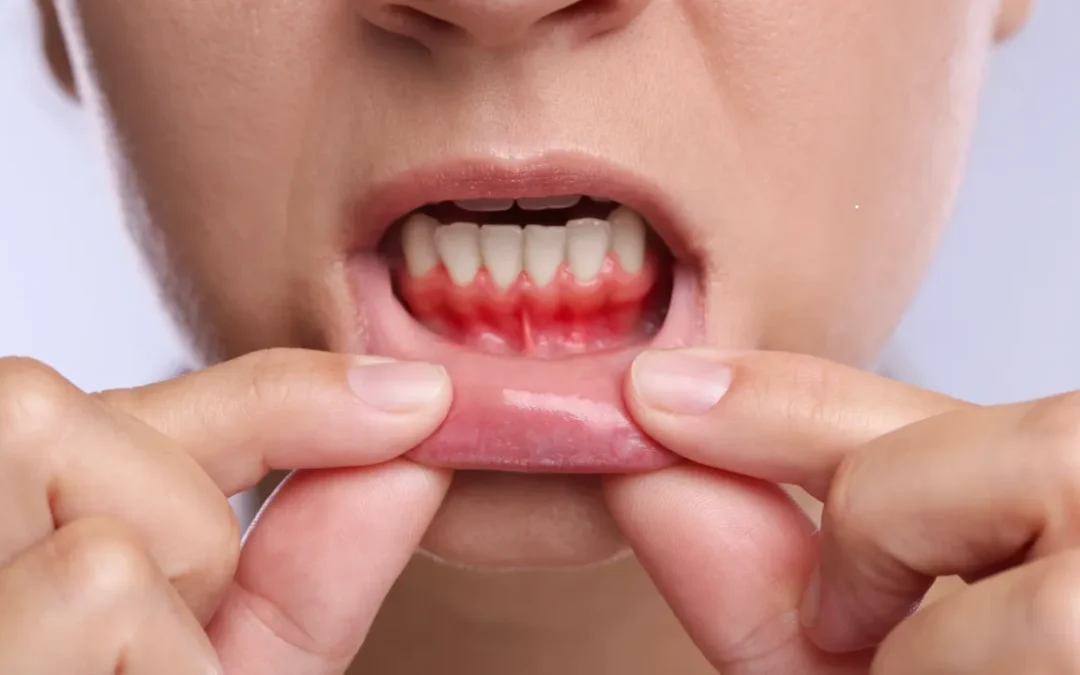
Bleeding gums during pregnancy can feel worrying, especially if your gums were healthy before. The good news is that pregnancy gingivitis is common and often manageable with the right dental care, daily brushing, flossing, and professional cleaning. Still, it should not be ignored. Gum inflammation can get worse if plaque stays around the teeth for too long. For women in St leonard and nearby areas, a pregnancy-safe dental checkup at St Leonards Green Dental can help spot gum problems early and keep your mouth healthy during pregnancy.
What Is Pregnancy Gingivitis?
Pregnancy gingivitis is inflammation of the gums that happens during pregnancy. It usually causes red, swollen, tender, or bleeding gums, especially when brushing or flossing. It is linked to pregnancy hormones and the way gums respond to dental plaque. NSW Health notes that pregnancy hormones may cause gum swelling and bleeding, while vomiting and cravings can increase plaque bacteria and acidity in the mouth. This condition is different from general gum soreness because it is often triggered or worsened by pregnancy changes. It does not mean your teeth are weak, and it does not mean you have done anything wrong. But it does mean your gums need extra care. If plaque is not removed properly, mild gingivitis can progress into more serious gum disease.
Why Pregnancy Gingivitis Happens
Pregnancy gingivitis usually happens because the gums become more sensitive to plaque. Plaque is a sticky layer of bacteria that forms on teeth every day. During pregnancy, higher levels of estrogen and progesterone can increase blood flow to the gums and make gum tissue react more strongly to plaque buildup. Morning sickness can also play a role. Frequent vomiting or acid reflux can raise acid levels in the mouth, which may irritate gums and affect tooth enamel. Food cravings, frequent snacking, sugary drinks, and tiredness can also make oral hygiene harder to maintain.
| Cause | How It Affects Gum Health |
| Hormonal changes | Makes gums more sensitive and prone to bleeding |
| Plaque buildup | Triggers gum inflammation |
| Morning sickness | Increases acid exposure in the mouth |
| Sugary foods or drinks | Feeds oral bacteria |
| Poor brushing or flossing | Allows plaque to harden into tartar |
| Previous gum disease | Raises the risk of worse inflammation |
Signs You May Have Pregnancy Gingivitis
The most common sign is gum bleeding after brushing or flossing. Some women also notice swollen gums, sore gums, red gums, puffy gums, bad breath, or tenderness around certain teeth. These symptoms may feel mild at first, but they can become more uncomfortable if plaque and tartar are left untreated.
Common symptoms include:
- Bleeding gums while brushing
- Gum bleeding after flossing
- Swollen or puffy gums
- Red or inflamed gums
- Tender or painful gums
- Bad breath
- Gum sensitivity while eating
- Gum recession in more advanced cases
If bleeding is heavy, painful, or keeps happening, it is better to book a dental exam instead of waiting until after delivery.
When Pregnancy Gingivitis Usually Starts and Peaks
Pregnancy gingivitis can start early, but many women notice it more during the second trimester. Symptoms may become stronger in the second and third trimester because hormone levels remain high and gums may stay more reactive to plaque. Some women notice improvement after baby’s birth as hormone levels settle. However, plaque, tartar, cavities, or periodontitis will not disappear on their own.
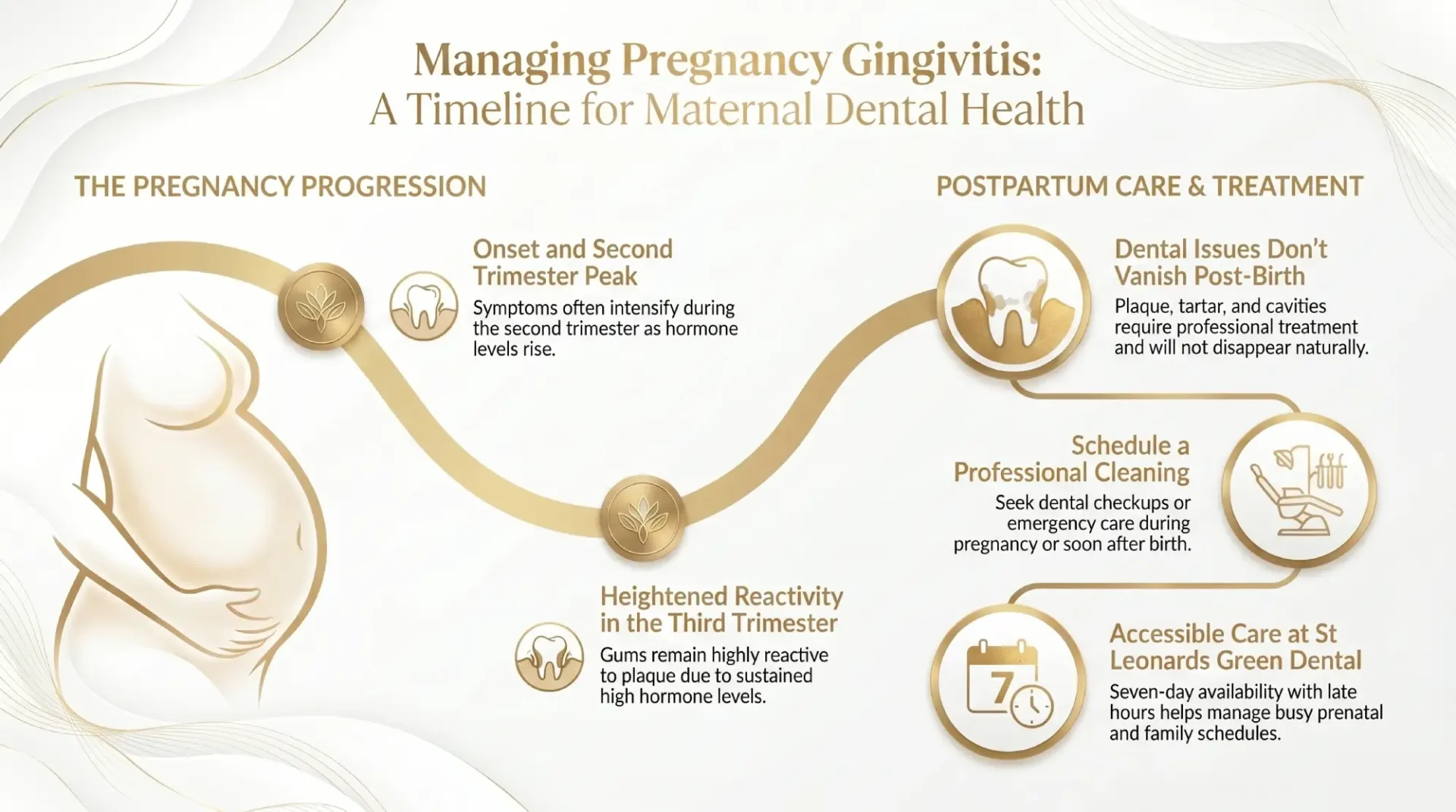
That is why a dental visit during pregnancy or soon after birth is helpful. At St Leonards Green Dental, patients can access general dental checkups, professional cleaning, fillings, emergency care, and other dental services. The clinic is open seven days a week with late opening hours, which can be helpful for pregnant women managing work, family, and prenatal appointments.
Is Pregnancy Gingivitis Dangerous for You or Your Baby?
Mild pregnancy gingivitis is usually manageable, but it can become more serious if it is ignored. The main concern is that untreated gum inflammation may progress into periodontitis, which is a deeper form of gum disease. Periodontitis can affect the tissues and bone that support the teeth. It may lead to gum pockets, gum infection, loose teeth, and tooth loss in severe cases.
For pregnancy, the concern is bigger because research has linked serious gum disease with higher risks such as preterm birth and low birth weight. This does not mean every woman with bleeding gums will have pregnancy complications. It means gum health should be part of prenatal care, just like diet, sleep, blood pressure, and regular checkups. If your gums bleed often, feel painful, or look swollen, a dental visit can help reduce the risk of gum disease progression.
How a Dentist Diagnoses Pregnancy Gingivitis
A dentist diagnoses pregnancy gingivitis through a dental exam and gum assessment. During the appointment, the dentist checks your teeth, gums, plaque levels, tartar buildup, gum bleeding, and any signs of infection. They may also check for gum pockets, which can show whether gingivitis has progressed into periodontitis.
The dentist may ask about your pregnancy stage, morning sickness, vomiting, cravings, current medications, previous gum disease, and any advice from your pregnancy care provider. This helps them choose safe care options. This kind of checkup can be useful for pregnant patients who want clear guidance without delaying necessary dental care.
Are Dental X-Rays Safe During Pregnancy?
Dental X-rays are usually avoided unless they are needed, but they can be done safely during pregnancy when proper protection is used. A dentist may recommend an X-ray if there is pain, infection, trauma, or a problem that cannot be diagnosed by looking in the mouth alone. If an X-ray is needed, protective shielding can be used for the abdomen and thyroid area. The dentist will only take images when the benefit is clear. For routine gum bleeding, an X-ray may not always be required. For toothache, swelling, deep decay, or suspected infection, it may help the dentist find the real cause and treat it safely.
Safe Treatment for Pregnancy Gingivitis
Pregnancy gingivitis treatment focuses on reducing plaque, calming gum inflammation, and stopping the problem from getting worse. Most treatment is gentle and safe when your dentist knows you are pregnant. The aim is to protect your gum health while keeping your pregnancy care team informed when needed. Treatment may include a professional dental cleaning, plaque and tartar removal, improved brushing and flossing guidance, and advice on pregnancy-safe oral care products. If infection is present, the dentist may discuss pregnancy-safe medication options or contact your obstetrician before prescribing anything.
Professional Dental Cleaning During Pregnancy
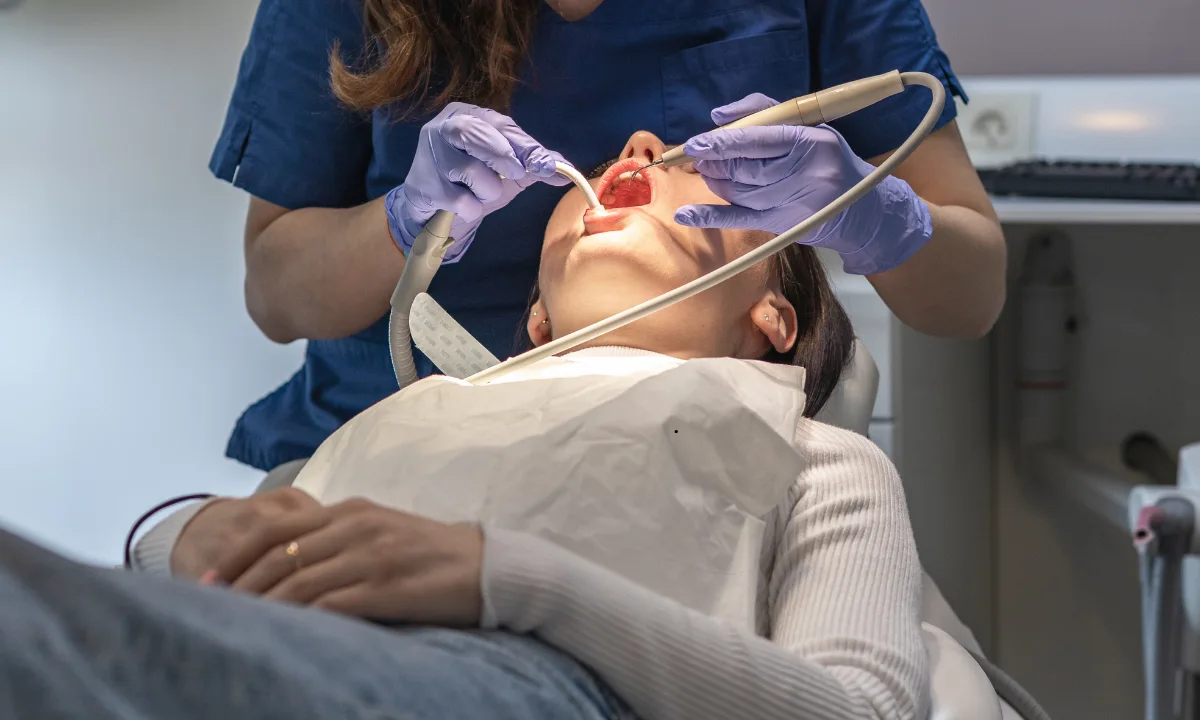
A professional dental cleaning removes plaque and tartar from areas that are hard to clean at home. This is important because tartar cannot be removed with normal brushing. Once plaque hardens, it can keep irritating the gums and make bleeding worse. Dental cleaning during pregnancy is often one of the most helpful steps for pregnancy gingivitis. It can reduce gum inflammation, improve breath, and help the dentist spot early issues before they become painful. For local patients, St Leonards Green Dental offers general dental care and professional cleaning, which can be a practical option for pregnant women.
At-Home Gum Care Recommended by Your Dentist
Home care is still the foundation of treatment. Even after a dental cleaning, plaque starts forming again every day, so daily care matters. Brush twice daily with fluoride toothpaste and use a soft-bristled toothbrush to avoid irritating sore gums. Floss once daily, but do it gently so you clean between the teeth without cutting the gum tissue.
If brushing makes you feel nauseous, try using a smaller toothbrush head, brushing at a different time of day, or rinsing first before brushing. If morning sickness is causing vomiting, rinse your mouth with water afterward and wait before brushing so acid does not damage softened enamel.
Simple home care checklist:
| Daily Step | Why It Helps |
| Brush twice daily | Removes plaque from tooth surfaces |
| Floss once daily | Cleans between teeth where brushing cannot reach |
| Use fluoride toothpaste | Helps protect enamel from decay |
| Rinse after vomiting | Reduces acid sitting on teeth and gums |
| Drink water often | Helps with dry mouth and plaque control |
| Limit sugary snacks | Reduces food for oral bacteria |
Mouthwash, Antibiotics, and Medication Safety
Some pregnant women may benefit from an alcohol-free mouthwash or antibacterial rinse, but it is best to ask a dentist before using stronger products. A mild mouthwash may help with bad breath and plaque control, while prescription mouthwash may be used if gum inflammation is more serious.
Antibiotics are not usually needed for simple pregnancy gingivitis. They may be considered if there is a gum infection, dental abscess, or other bacterial infection. In that case, your dentist will choose medication carefully and may speak with your pregnancy care provider. Always tell your dentist if you are pregnant, how many weeks pregnant you are, and whether you have allergies or take any prenatal supplements, prescription medicine, or over-the-counter medicine.
How to Prevent Pregnancy Gingivitis
Prevention is the best way to protect your gums during pregnancy. Since hormonal changes make gums more sensitive, keeping plaque under control is essential. Good oral hygiene, a healthy diet, and regular dental visits can greatly reduce the risk of gum inflammation.
Key preventive steps include:
- Brushing twice daily: Use a soft-bristled toothbrush and fluoride toothpaste. Brush gently to avoid aggravating tender gums.
- Flossing once daily: Clean between teeth to remove plaque that brushing alone cannot reach.
- Professional dental cleaning: A dentist can remove tartar buildup that forms despite daily brushing. Regular cleaning during pregnancy is safe, especially in the second trimester.
- Rinsing after vomiting or acid exposure: Use plain water or a warm saltwater rinse to neutralise acids from morning sickness.
- Healthy diet: Focus on whole foods like fruits, vegetables, dairy, and whole grains. Limit sugary snacks and drinks that feed oral bacteria.
- Hydration: Drinking plenty of water helps wash away food particles and reduce dry mouth, which can worsen gum sensitivity.
At St Leonards Green Dental, our team offers pregnancy-friendly preventive care. Early dental checkups allow us to detect early signs of gingivitis and provide gentle cleaning and advice on safe oral care products for pregnant patients.
When to Book a Dental Visit During Pregnancy
It’s important to see a dentist if you notice persistent or severe symptoms. Common reasons to book a pregnancy-safe dental appointment include:
- Gums that bleed consistently while brushing or flossing
- Swelling, tenderness, or redness of the gums
- Painful areas or pus around the teeth or gums
- Loose teeth or gum recession
- History of gum disease that may worsen during pregnancy
Even if symptoms seem mild, a professional checkup can prevent complications. Dental care during pregnancy is safe, and many treatments, including cleaning and minor procedures, can be done without affecting the pregnancy. St Leonards Green Dental provides flexible scheduling to accommodate prenatal appointments, making it easier for expectant mothers.
What to Expect at a Pregnancy Dental Appointment
When you visit the dentist during pregnancy, the first step is a thorough dental and gum examination. The dentist will:
- Assess plaque and tartar levels
- Check for gum pockets and signs of early periodontitis
- Discuss your pregnancy stage and any health considerations
- Recommend gentle cleaning or preventive treatments
- Advise on pregnancy-safe oral care products and routines
If needed, dental X-rays can be performed safely using protective shielding for the abdomen and thyroid. Any treatments or prescriptions are carefully chosen in consultation with your pregnancy care provider when necessary.
Pregnancy Gingivitis After Delivery
After the baby is born, hormone levels gradually return to normal, which often improves gum sensitivity. However, plaque and tartar remain, and any untreated gingivitis may persist. Postpartum dental checkups are important to restore optimal oral health. Maintaining daily brushing, flossing, and professional cleaning after delivery ensures that gum disease does not progress. This also helps protect your teeth while caring for a newborn and may reduce oral bacteria exposure to your baby.
Home Care Tips for Bleeding Gums During Pregnancy
Bleeding gums should not make you stop brushing. In most cases, gums bleed because plaque is sitting along the gumline and causing inflammation. If you stop brushing, plaque builds up faster, and the bleeding may get worse. The better approach is to clean gently but consistently.
Use a soft-bristled toothbrush and brush in small circular motions along the gumline. Avoid scrubbing hard. If flossing feels painful, try floss picks or interdental brushes, but use them gently. A warm saltwater rinse can also calm irritated gums. Mix half a teaspoon of salt in a cup of warm water, rinse for a short time, and spit it out.
You can also try these simple steps:
- Brush twice daily with fluoride toothpaste
- Floss once daily, especially before bed
- Rinse with water after vomiting
- Wait around 30 minutes before brushing after morning sickness
- Drink water often to reduce dry mouth
- Choose low-sugar snacks where possible
- Book a dental cleaning if bleeding continues
Final Thoughts
Pregnancy gingivitis is common, but it should never be ignored. Bleeding, swollen, or sore gums are signs that your mouth needs extra care during pregnancy. With daily brushing, flossing, a balanced diet, and professional dental cleaning, most cases can be managed safely. If you are pregnant and noticing gum bleeding, St Leonards Green Dental can help with a gentle dental exam, professional cleaning, and pregnancy-safe advice for your oral health.

Those who desire to look better—teenagers and adults—often receive dental work. Children should also begin visiting the dentist early on, Read more

In the world of orthodontics, Invisalign has emerged as a revolutionary alternative to traditional metal braces. This advanced treatment offers Read more
Choosing the right dentist is one of the most important healthcare decisions you’ll make. Whether you're in need of routine Read more
Overcrowded teeth can affect more than just your smile; they may lead to difficulty cleaning teeth, increased risk of tooth Read more