
Oral health is about more than just keeping your smile bright; it’s essential for your overall well-being. Poor oral hygiene can lead to issues such as tooth decay, gum disease, and even heart disease. Thankfully, with a few simple habits and tools, maintaining good oral health can be easy and effective. In this blog post, we’ve gathered expert tips from Australian dentists to help you keep your teeth and gums healthy for years to come. Whether you’re dealing with common problems like sensitive teeth or want to prevent issues like plaque buildup, this guide will provide actionable advice to help.
1. Brush Your Teeth Twice a Day (Morning and Before Bed)
Brushing your teeth twice a day is one of the simplest yet most important habits for maintaining good oral health. Brushing in the morning and before bed helps remove plaque, prevent tooth decay, and protect gum health. Brushing your teeth removes food particles, bacteria, and plaque that accumulate on the surface of your teeth throughout the day and night. Plaque, when left untreated, hardens into tartar, which can only be removed by a dentist or hygienist. This buildup is a leading cause of gum disease (gingivitis) and cavities.
Best Practices:
- Use a Soft-Bristled Toothbrush: A soft-bristled toothbrush is gentle on your enamel while still being effective at removing plaque.
- Brush for Two Minutes: Most people don’t brush long enough. Brushing for two minutes ensures that all surfaces of your teeth are cleaned thoroughly.
- Circular Motions: Instead of brushing back and forth, use gentle circular motions to prevent damage to your enamel and gums.
Brushing twice a day with fluoride toothpaste helps remineralise tooth enamel, making it stronger and more resistant to decay.
2. Floss Daily for Healthy Gums and Teeth
Flossing is just as important as brushing but often overlooked. Using dental floss daily helps remove food particles and plaque from between your teeth, where your toothbrush can’t reach. Even with the best brushing techniques, plaque and food particles can remain between your teeth, leading to tooth decay and gum disease. Flossing ensures these hidden areas are cleaned and prevents the buildup of bacteria.
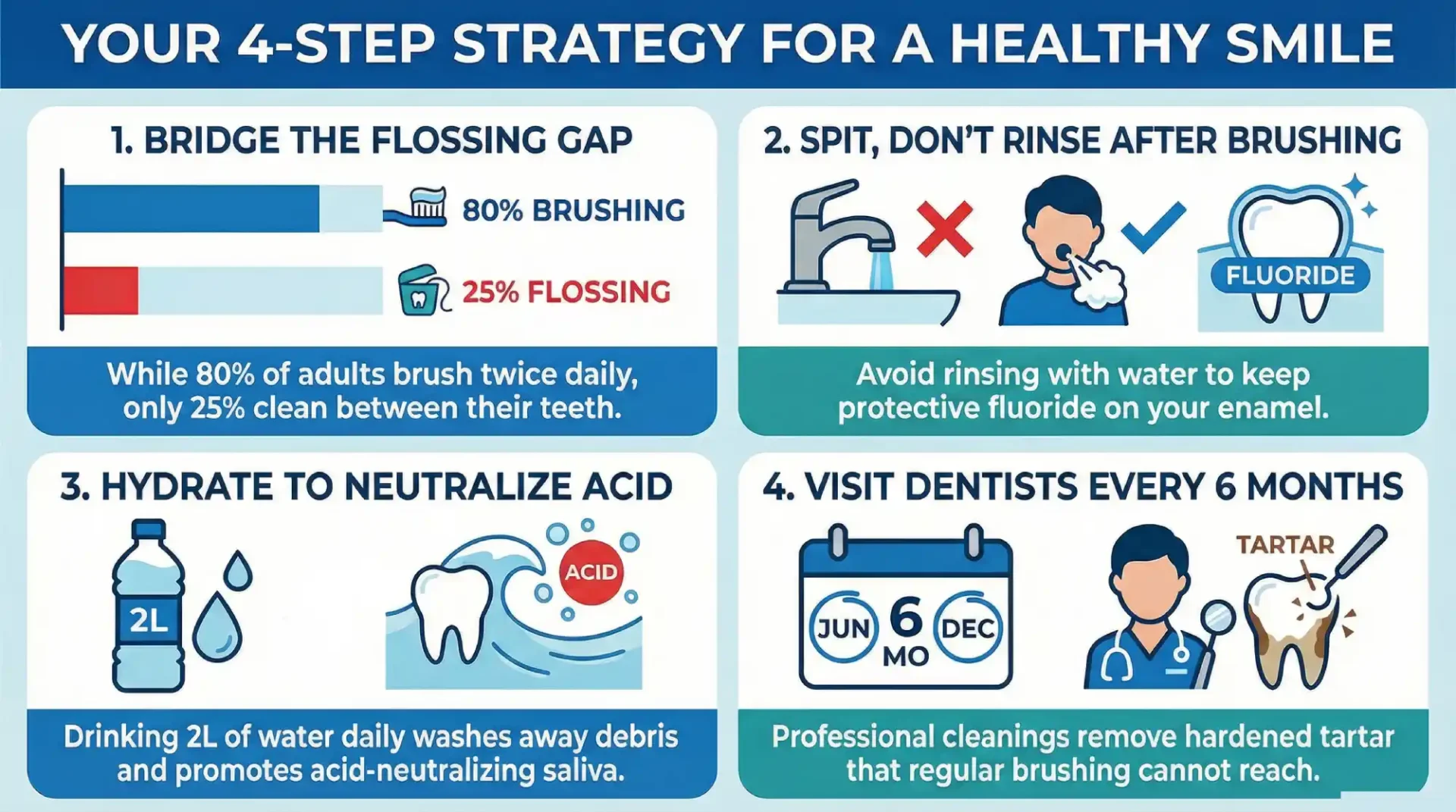
80% of adults brush their teeth two or more times a day, yet only 25% of them clean between their teeth using floss or interdental brushes. This highlights the importance of adding flossing to your routine to prevent gum disease and tooth decay.
Best Practices:
- Use Dental Floss or Interdental Brushes: Regular floss is effective for cleaning between the teeth, but interdental brushes or floss picks can be easier for some people to use.
- Daily Routine: Make flossing a part of your daily routine to ensure consistent oral health. It only takes a minute to remove plaque and food particles.
- Gentle Technique: Be gentle when flossing to avoid injuring your gums. Slide the floss up and down between your teeth and curve it around each tooth to clean below the gum line.
By incorporating flossing into your daily routine, you can avoid common issues like bleeding gums and gum inflammation.
3. Don’t Rinse After Brushing
Many people rinse their mouth with water or mouthwash after brushing, but this can wash away the fluoride in your toothpaste, which is essential for protecting your teeth. Fluoride strengthens tooth enamel, helping to prevent tooth decay and sensitivity. When you rinse after brushing, you dilute and wash away the protective fluoride left on your teeth.
Up to 2 in 3 Australians experience sensitive teeth, with common triggers being hot, cold, or sweet foods. If you experience tooth sensitivity, try using sensitivity toothpaste and consult your dentist for personalised advice.
Best Practices:
- Skip the Rinse: After brushing, avoid rinsing your mouth with water. If you prefer a fresh feeling, use an alcohol-free mouthwash at a different time of day.
- Wait to Drink Water: If you need to drink water after brushing, wait at least 30 minutes to let the fluoride work its magic.
This small habit can make a big difference in maintaining a healthy smile and protecting your enamel from decay.
4. Use Mouthwash for Fresh Breath and Added Protection
While mouthwash shouldn’t replace brushing and flossing, it can be an excellent addition to your oral care routine. Mouthwash helps kill bacteria, freshen your breath, and provide an extra layer of protection against gum disease. Mouthwash can reach areas in your mouth that may not be thoroughly cleaned with brushing and flossing alone. It also helps reduce the risk of bad breath (halitosis) by targeting the bacteria that cause odors.
Best Practices:
- Choose an Alcohol-Free Mouthwash: Alcohol-based mouthwashes can dry out your mouth, leading to more bacteria buildup. Opt for an alcohol-free mouthwash to keep your mouth hydrated.
- Use Mouthwash After Brushing: Swish mouthwash in your mouth after brushing and flossing for added protection and a fresh feeling.
Mouthwash is a great tool to complement your daily routine and give you that extra protection against bacteria.
5. Limit Sugar and Acidic Foods
One of the biggest culprits of tooth decay is a high intake of sugary and acidic foods. These foods feed the harmful bacteria in your mouth, which produce acids that attack your tooth enamel. Sugary foods like candy, cakes, and sodas can lead to plaque buildup and eventually result in cavities. Acidic foods like citrus, coffee, and soft drinks erode tooth enamel, making your teeth more susceptible to decay and sensitivity.
Best Practices:
- Limit Sugary Snacks: Try to reduce your intake of sugary snacks, especially between meals. If you do indulge, rinse your mouth with water afterward.
- Avoid Acidic Drinks: Drinks like orange juice, sodas, and sports drinks can soften enamel. It’s best to consume these in moderation and rinse your mouth with water afterward.
- Eat a Balanced Diet: A healthy diet rich in calcium (milk, cheese, leafy greens) and phosphorus (fish, meat) can strengthen your tooth enamel.
By controlling your sugar and acid intake, you can prevent tooth decay and protect the health of your gums and teeth.
6. Eat a Balanced Diet for Strong Teeth
Your diet directly impact in oral health. The nutrients you consume can either help strengthen your teeth or contribute to their deterioration. A balanced diet provides the vitamins and minerals needed to support healthy teeth and gums. Foods that are rich in calcium, vitamin D, and phosphorus help to strengthen tooth enamel, making it more resistant to decay. In contrast, a diet high in sugary or processed foods can lead to tooth decay, gum disease, and other dental problems.
Best Practices:
- Calcium and Vitamin D: Include calcium-rich foods like milk, cheese, yogurt, and leafy greens in your diet. These nutrients help protect and remineraliase tooth enamel. Vitamin D also helps your body absorb calcium more effectively.
- Phosphorus: Foods like salmon, sardines, and eggs are great sources of phosphorus, which is essential for maintaining strong teeth.
- Stay Hydrated: Drink at least 2L of water a day to rinse away food particles, neutralise acids, and promote saliva production, which helps protect your teeth from decay.
- Limit Processed Foods: Try to avoid sticky and sugary foods, such as candy, sodas, and baked goods. These foods feed harmful bacteria in your mouth, contributing to plaque buildup and tooth decay.
By eating a nutrient-rich, well-balanced diet, you can keep your teeth and gums healthy and prevent many common oral health issues.
7. Drink Plenty of Water
Water is essential not just for your overall health, but also for maintaining healthy teeth and gums. Drinking enough water throughout the day can help prevent issues like bad breath, plaque buildup, and tooth decay. Water is one of the best ways to rinse away food particles and harmful bacteria that may accumulate in your mouth after eating. It also helps neutralize acids that could erode your tooth enamel.
Best Practices:
- Fluoridated Tap Water: Drinking fluoridated tap water is particularly beneficial as fluoride helps to remineralise tooth enamel and protect against decay. It also reduces the likelihood of cavities.
- Drink After Meals: Drinking water after meals can help wash away food particles and acids that can lead to tooth decay and enamel erosion.
- Stay Hydrated: Aim for at least 8 cups (about 2 liters) of water per day. Staying hydrated supports saliva production, which is vital for neutralising acids and protecting against gum disease and cavities.
Drinking water regularly will not only help you stay hydrated but also contribute to a cleaner mouth and healthier teeth.
8. Visit Your Dentist Regularly (Every 6 Months)
Even if you follow the best oral hygiene practices at home, it’s still important to visit your dentist for professional checkups and cleanings. Regular dental visits help identify issues early and ensure your teeth and gums stay healthy. Dentists can detect early signs of tooth decay, gum disease, and oral cancer before they become major problems. Regular checkups also allow for professional cleaning, removing plaque and tartar buildup that can’t be removed with regular brushing and flossing.
Best Practices:
- Twice-Yearly Visits: Aim to visit your dentist every six months for a thorough cleaning and exam. If you have specific health concerns, such as gum disease or tooth sensitivity, you may need to visit more frequently.
- Early Detection: Regular dental visits allow your dentist to detect issues early, such as cavities, plaque buildup, and gum infections, so they can be treated before they cause significant damage.
- Preventive Care: Your dentist may also offer preventive treatments like fluoride treatments, sealants, and deep cleanings to keep your teeth and gums in top condition.
Taking the time to visit your dentist regularly can save you from painful and expensive treatments later on.
9. Protect Your Teeth During Sports (Use a Mouthguard)
If you participate in sports, especially contact sports, it’s important to protect your teeth. A mouthguard is an essential tool that can prevent dental injuries like chipped teeth, knocked-out teeth, and gum damage. Dental injuries are common in sports, and they can be painful and expensive to treat. A custom-fitted mouthguard helps cushion your teeth from impact and protects your gums and lips.
Best Practices:
- Use a Custom-Fitted Mouthguard: Professionally made mouthguards are the best option for comfort and protection. Your dentist can create a mouthguard that fits your mouth perfectly, offering better protection than store-bought versions.
- Wear Mouthguards for Contact Sports: Always wear a mouthguard during sports like rugby, football, basketball, and boxing. Even in non-contact sports, mouthguards can be a good idea if you’re at risk of falling or injury.
Wearing a mouthguard can help protect your smile and prevent the pain and hassle of dental injuries.
10. Stop Smoking for Better Oral Health
Smoking is one of the leading causes of gum disease, tooth decay, and bad breath. Quitting smoking not only benefits your oral health but also improves your overall health. Smoking reduces blood flow to your gums, making it harder for your body to fight infections. It also dries out your mouth, leading to bad breath (halitosis) and an increased risk of tooth decay.
Best Practices:
- Quit Smoking: The best way to protect your oral health is to quit smoking. This will reduce your risk of gum disease, oral cancer, and tooth loss.
- Seek Support: If you’re struggling to quit, consider joining a support group or using smoking cessation tools like nicotine gum or patches.
- Professional Help: Consult your dentist for advice on how to quit smoking and maintain a healthy mouth during the process.
Quitting smoking will not only improve your oral health but also reduce your risk of serious health conditions like heart disease, stroke, and respiratory issues.
Benefits of Following These Tips
Consistency is key when it comes to oral health. Following these top oral health tips will lead to several long-term benefits, including:
- Healthier Teeth and Gums: By brushing twice a day and flossing regularly, you remove harmful bacteria and plaque buildup that can lead to gum disease and tooth decay.
- Better Oral Hygiene: Proper brushing, flossing, and using mouthwash as part of your daily routine keeps your mouth fresh and free of bacteria.
- Improved Overall Health: Good oral hygiene is linked to better overall health, including a reduced risk of developing conditions such as heart disease, stroke, and high blood pressure, all of which can be affected by poor oral health.
While these tips are beneficial for most people, it’s important to remember that everyone’s oral health needs are unique.
Oral Health Myths vs. Facts
Myth: Flossing isn’t necessary if you brush well.
Fact: Flossing is an essential part of oral hygiene. While brushing helps clean the surface of your teeth, flossing removes plaque and food particles from between your teeth, where your toothbrush can’t reach. Neglecting to floss can lead to gum disease and cavities between the teeth.
Myth: Whitening toothpaste can whiten teeth dramatically.
Fact: Whitening toothpaste can help remove surface stains on your teeth, but it doesn’t significantly alter the natural color of your teeth. For more dramatic whitening results, consider professional treatments like teeth whitening done by a dentist.
Myth: Brushing harder gives a better clean.
Fact: Brushing your teeth too hard can actually harm your tooth enamel and gums. It’s important to brush gently using a soft-bristled toothbrush. A gentle, circular brushing motion is most effective at cleaning your teeth without causing damage.
Conclusion: The Path to Lifelong Oral Health
Achieving and maintaining excellent oral health is not a difficult task, but it does require consistency and attention. The good news is, many of the habits required to keep your teeth and gums healthy are easy to incorporate into your daily routine. By brushing and flossing regularly, eating a balanced diet, and visiting your dentist for regular checkups, you can enjoy a lifetime of healthy smiles. Consulting your dentist regularly will ensure that you receive personalised advice based on your specific oral health conditions. If you have chronic health conditions like diabetes, heart disease, or hypertension, it’s especially important to seek professional care. These conditions can affect your oral health, and your dentist can help guide you in maintaining a healthy smile while managing other health concerns.


