
Root Canal Treatment Lane Cove

A toothache that throbs through the night or flares every time you sip a hot coffee is often a sign that something deeper is going on. When decay, a crack or an old injury reaches the soft tissue inside a tooth, the problem rarely resolves by itself. Root canal treatment for Lane Cove patients is available at St Leonards Green Dental, a few minutes from Lane Cove, where our dentist can assess the tooth and, where clinically suitable, treat the infection while keeping your natural tooth in place.
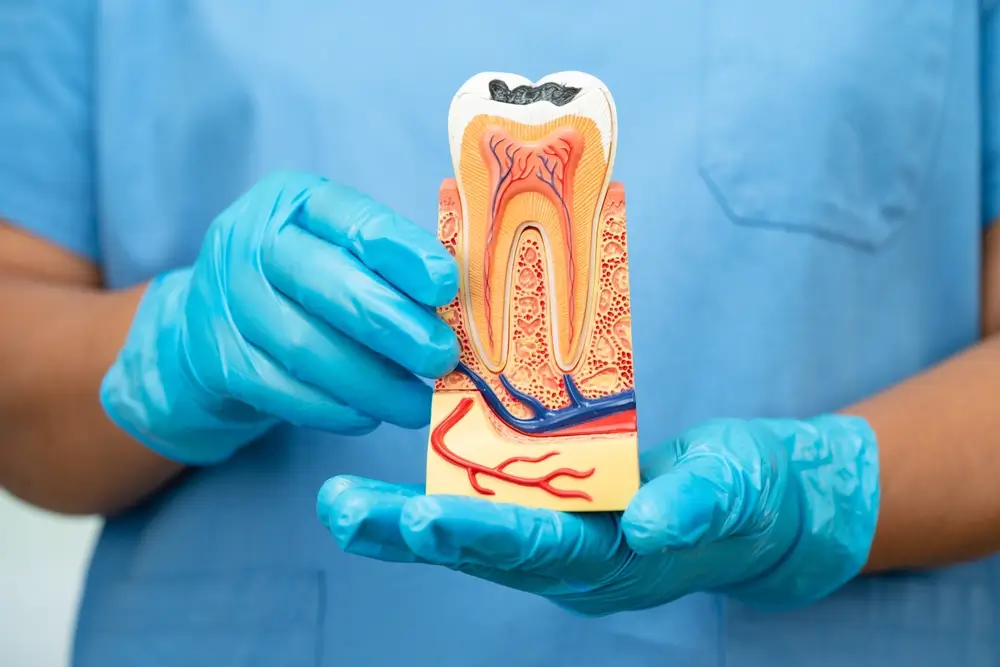
Inside every tooth is a chamber of nerves and blood vessels known as the pulp. Root canal therapy removes this tissue once it becomes inflamed, infected or has died, then disinfects and seals the narrow channels that run down through each root. Our team manages the full process in-house, from the first X-ray to the final restoration.
Signs A Tooth May Need Root Canal Therapy
Toothache has many possible causes, and not every sore tooth needs endodontic treatment. Root canal therapy may be discussed when an examination shows:
- Decay that has travelled through the enamel and dentine into the pulp
- A crack or fracture that has exposed the inner tooth
- A pimple-like swelling on the gum, which can indicate an abscess
- Lingering sensitivity to hot or cold that remains after the trigger is removed
- Pain when chewing or when pressure is placed on the tooth
- A tooth that has darkened after a knock or sports injury
- Nerve damage following repeated fillings or dental work on the same tooth
You might also notice a bad taste, tender gums or swelling in the face or jaw. Some infected teeth produce no pain at all, particularly once the nerve has died, which is why problems are often picked up at a routine check-up rather than through symptoms.
Diagnosis Comes Before Treatment
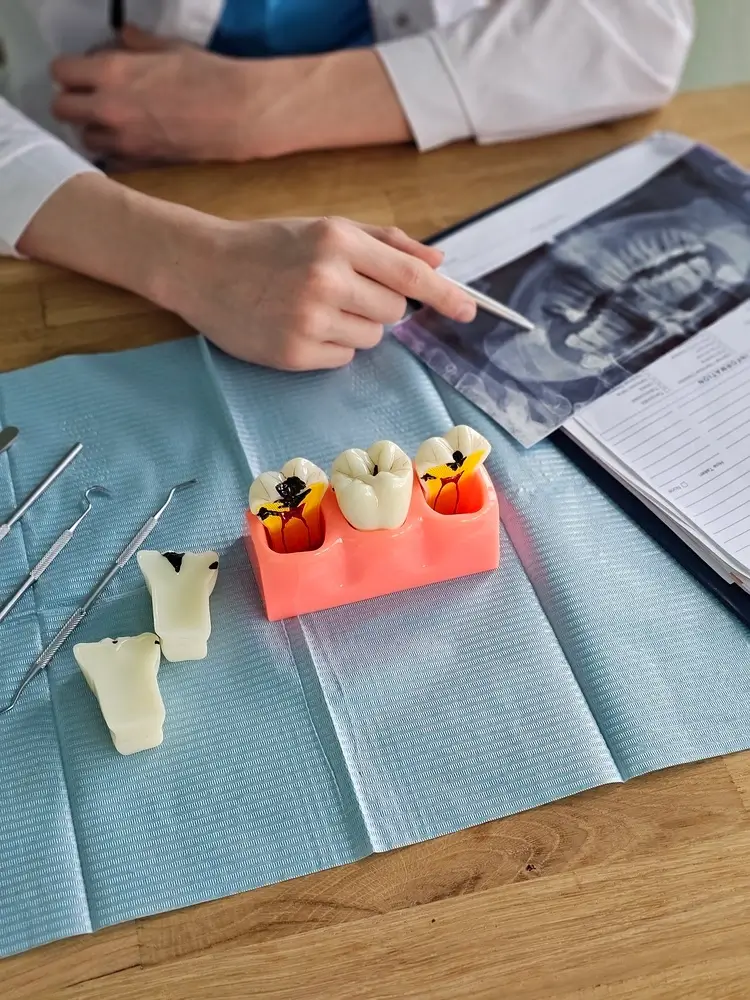
Before any treatment is recommended, our dentist examines the tooth and surrounding gum, tests how it responds and takes X-rays to see the roots and supporting bone. Digital and panoramic imaging helps show how far decay or infection has spread and how many canals the tooth is likely to have.
Sometimes the cause turns out to be something else entirely, such as a cracked filling, gum inflammation, sinus pressure or clenching at night. You will receive a clear explanation of the findings and the treatment options, including what may happen if you choose to wait.
How Root Canal Treatment Is Carried Out
Treatment usually takes place over one or more appointments, depending on the tooth. A front tooth often has a single canal, while molars can have three or four curved canals that need more time.
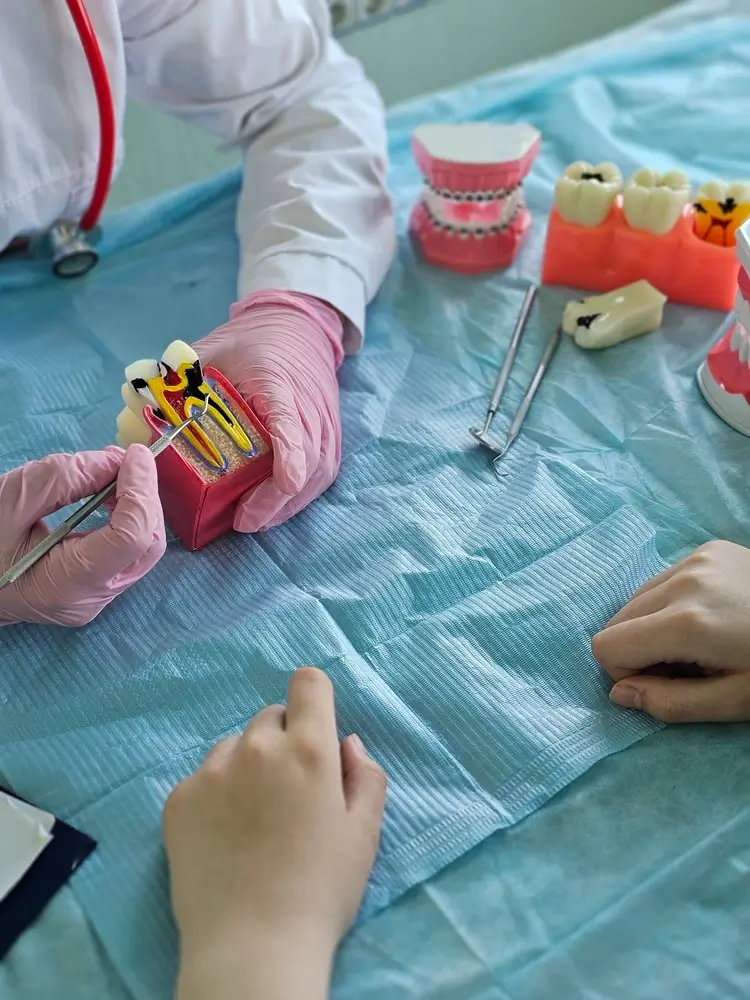
The tooth and surrounding gum are numbed with local anaesthetic before a small access point is made through the crown of the tooth. Our dentist removes the affected pulp, then cleans and shapes each canal using fine instruments. An antibacterial medication is placed inside the tooth, and a temporary filling seals it between visits if a second appointment is needed.
At the final stage, the canals are filled with a biocompatible material and sealed to limit the chance of bacteria re-entering. Where an abscess is causing significant swelling, medication may be prescribed first so the area settles and becomes easier to numb.
Root canal therapy is an invasive procedure, though it is not surgery in the way a surgical extraction is. All dental procedures carry some risk, and our dentist will talk you through the likely benefits, limitations and alternatives before you decide.
Keeping You Comfortable During Treatment
Many people put off root canal treatment because they expect it to be painful. In most cases, the aim of the procedure is to remove the source of the pain. Our dentist confirms the tooth is fully numb before starting and can pause whenever you need a break.
Longer appointments can tire the jaw, so we use a soft mouth prop to help you rest your muscles. For patients who feel nervous in the dental chair, nitrous oxide (laughing gas) may be available where suitable. Let us know about any worries when you book, and we can plan the visit around them.
Some tenderness is normal for a few days afterwards as the surrounding tissue recovers. Contact us if pain worsens, swelling increases or you notice anything unexpected. No clinic can guarantee a treatment will be free of discomfort or promise a particular outcome, but we will give you clear aftercare advice and remain available if concerns arise.
Protecting The Tooth After The Canals Are Sealed
Once the pulp has been removed, a tooth no longer has its own blood supply and can become more brittle over time. Back teeth in particular take heavy biting forces and are more likely to split without extra protection.
For this reason, a custom dental crown is often recommended to cover the treated tooth and restore its strength and shape. Whether you need one depends on where the tooth sits, how much natural structure remains and the size of any existing fillings. Our dentist will explain the options before the final restoration is placed.
Caring for a root-filled tooth is much the same as caring for the rest of your mouth: brush twice a day, clean between your teeth and keep up regular check-ups. Like any dental work, the lifespan of the treatment cannot be guaranteed.
Saving The Tooth Or Removing It
Keeping a natural tooth where possible has practical advantages. It helps you chew evenly, holds neighbouring teeth in position and avoids the need to fill a gap later.
That said, not every tooth can be predictably saved. If a root is split, the infection is extensive or too little tooth structure remains, extraction may be the more sensible choice. Replacement options such as dental implants, a bridge or a denture can then be discussed, each with its own process, cost and upkeep. You are welcome to seek a second opinion before making a decision.
Getting To Our Clinic From Lane Cove
Our practice is inside the Medical Centre at Level 1, Tower 2, 88 Christie Street, St Leonards, opposite the hospital and close to St Leonards Station. For most Lane Cove residents, the trip is roughly three kilometres along Longueville Road and the Pacific Highway, typically around five to ten minutes by car depending on traffic.
If you prefer public transport, direct buses run between Lane Cove Interchange on Longueville Road and St Leonards Station, with a travel time of under ten minutes on most services. Check the Transport for NSW trip planner for current routes and timetables before you travel. From the station, the clinic is a short walk.
We regularly see patients from across the Lane Cove area, including Lane Cove West, Lane Cove North, Riverview, Longueville, Northwood, Linley Point and Greenwich. Our opening hours are Monday to Friday, 8:30 am to 5:00 pm, with Saturday appointments available by arrangement.
Why Lane Cove Patients Choose St Leonards Green Dental
Our clinic has served the Lower North Shore since 2008. Principal dentist Dr Nazila Nosratieh took over the practice in 2019 and brings more than 20 years of clinical experience, along with a Doctor of Dental Surgery and a PhD in Oral Biology.
Root canal work relies on seeing fine detail inside a small space. Our dentist uses dental loupes for magnification, along with digital X-rays, a panoramic X-ray unit and modern endodontic equipment to support accurate diagnosis and careful treatment.
Some families have now visited us across three generations. Beyond root canal therapy, our team provides general check-ups, fillings, crowns, emergency appointments, dental implants, orthodontics and cosmetic treatments, so most of your dental care can be managed in one place. Where a case is particularly complex, we can arrange a referral to an endodontist or other specialist.
Learn more about our general services for Lane Cove families.
Urgent Tooth Pain
A severe toothache, a swollen face, a broken tooth or signs of an abscess should be assessed promptly. While we do not run an after-hours emergency service, we try to keep time available for urgent cases during opening hours whenever the schedule allows.
Call the clinic as early in the day as you can and describe what you are experiencing. Our team will let you know whether an urgent appointment is available. The first goal is to find the cause and relieve pain; root canal treatment may be part of the plan, or another approach may be more appropriate. If you have difficulty breathing or swallowing, or swelling is spreading rapidly, seek hospital care immediately.
Caring For The Lane Cove Community
Lane Cove combines a village-style town centre with leafy residential streets and a large share of bushland. Many residents shop along Longueville Road and around Lane Cove Plaza, meet friends at The Canopy dining precinct or walk the tracks of Lane Cove National Park beside the Lane Cove River.
It is a community of young families, professionals and long-term residents, many of whom already travel to St Leonards for work, the train or appointments at the nearby hospital precinct. Our location makes it easy to fit a dental visit around the school run, a commute or a morning of errands in the village.
* Any surgical or invasive procedure carries risks. Before proceeding, you should seek a second opinion from an appropriately qualified health practitioner.
Book Root Canal Treatment For Lane Cove Patients
A tooth that aches, swells or stays sensitive is worth having checked sooner rather than later. An early examination can confirm whether root canal therapy is needed or whether a simpler treatment will do.
Contact St Leonards Green Dental to arrange an appointment for root canal treatment near Lane Cove. New and existing patients can request a booking online or by calling 02 9438 4352.
Frequently Asked Questions
How far is your clinic from Lane Cove?
Our clinic on Christie Street, St Leonards is about three kilometres from Lane Cove. Most patients arrive within five to ten minutes by car, or by a short direct bus ride from Lane Cove Interchange.
Do I need a referral for root canal treatment?
No. You can book directly with our general dental team. If your tooth needs specialist endodontic care, we can organise a referral for you.
Can antibiotics fix an infected tooth instead?
Antibiotics may help control a spreading infection in some situations, but they cannot remove infected or dead tissue from inside the tooth. Without treatment of the pulp itself, the infection is likely to return.
How long does each appointment take?
Appointment length depends on the tooth and the number of canals. Front teeth are usually quicker to treat than molars. We will give you an estimate after the initial examination.
Will I need time off work after treatment?
Many people return to their usual routine the same day, although the numbness can take a few hours to wear off. Some tenderness while biting is common for a short period.
What if the tooth cannot be saved?
If root canal therapy is unlikely to succeed, our dentist will explain the reasons and discuss extraction and replacement options with you.
Can I get a second opinion first?
Yes. You are entitled to seek a second opinion from another appropriately qualified health practitioner before starting treatment.
Any surgical or invasive procedure carries risks. Before proceeding, you should seek a second opinion from an appropriately qualified health practitioner.