
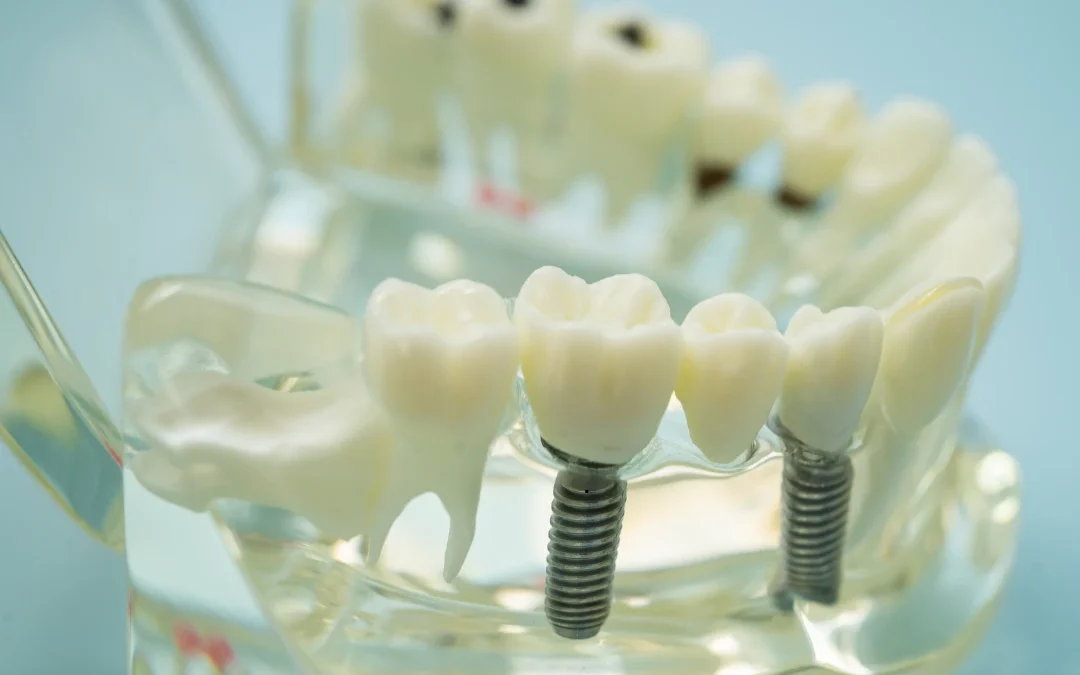
Dental implants offer a life-changing solution for those missing teeth, but deciding between multiple tooth implants and full mouth implants can be overwhelming. With so many options available, it’s important to understand the key differences, benefits, and processes involved in each procedure. Whether you are dealing with multiple missing teeth or considering a complete smile makeover, this guide will provide you with the information you need to make an informed decision. At St Leonards Dental, we are committed to providing the best care and advice to help you restore your smile and regain confidence.
Understanding Dental Implants and Options for Teeth Replacement
What Are Dental Implants?
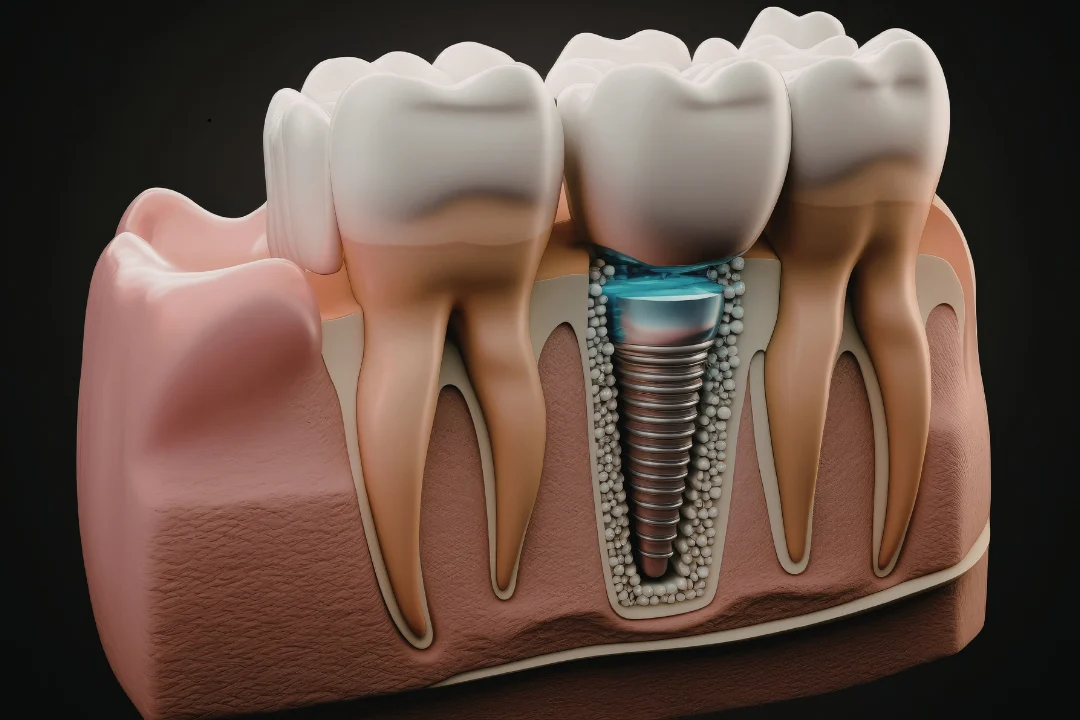
Dental implants are a modern, permanent solution to replace missing teeth. Unlike dentures or bridges, implants are surgically placed into the jawbone, providing a stable foundation for artificial teeth. The implant itself is made from titanium, a material known for its strength and ability to fuse with the bone in a process called osseointegration. This fusion creates a durable, long-lasting bond that mimics the function of natural teeth.
Dental implants offer many benefits, including:
- Improved functionality: Unlike dentures, implants restore full chewing ability, allowing you to eat and speak comfortably.
- Preservation of jawbone health: The implant helps stimulate the jawbone, preventing bone loss that often occurs after tooth loss.
- Natural appearance: Implants look and feel like natural teeth, providing a seamless and aesthetically pleasing result.
Types of Dental Implants: Single, Multiple, and Full Mouth
There are several types of dental implants, each suited for different needs:
- Single Tooth Implants: As the name suggests, this option is for replacing a single missing tooth. A titanium post is placed into the jaw, and a custom-made crown is attached to complete the restoration. This is ideal for individuals missing just one tooth.
- Multiple Teeth Implants: If you are missing several adjacent teeth, multiple implants can be used to support a dental bridge. This solution avoids the need to crown healthy teeth, making it more efficient than traditional bridges.
- Full Mouth Implants: This option is designed for individuals who have lost most or all of their teeth. Full mouth implants, including All-on-4 and All-on-6 techniques, involve placing multiple implants to support a full set of replacement teeth. This option offers a comprehensive restoration, giving you a complete smile and improved functionality.
Each of these options offers a solution to tooth loss, but the choice depends on your specific needs and oral health.
What Are Multiple Tooth Implants?
Multiple tooth implants are an excellent option for those who have lost several adjacent teeth. Instead of using traditional bridges that may require the alteration of healthy adjacent teeth, this solution uses implants to replace the missing teeth and support a dental bridge. This procedure is ideal for individuals who are missing a group of teeth but still have healthy teeth on either side to anchor the bridge.
The procedure involves:
- Placement of titanium posts into the jawbone where the missing teeth were.
- Fitting of a dental bridge that spans the gap created by the missing teeth.
- Osseointegration, where the titanium posts fuse with the jawbone to provide long-term stability.
Benefits of Multiple Teeth Implants:
- Preserving healthy teeth: Unlike traditional bridges that require healthy adjacent teeth to be reshaped, multiple tooth implants preserve the integrity of your remaining natural teeth.
- Restoring appearance and function: Multiple tooth implants restore the functionality of your mouth, allowing you to chew and speak without discomfort.
- Preventing bone loss: Since implants fuse with the jawbone, they help prevent the bone loss that often accompanies missing teeth.
What Are Full Mouth Implants?
Full mouth implants are a comprehensive solution for individuals who have lost most or all of their teeth. This procedure involves placing multiple implants in the upper or lower jaw, which are then used to support a full set of replacement teeth. Techniques like All-on-4 and All-on-6 have revolutionised full mouth restorations by reducing the number of implants needed to secure a full set of teeth.
The process involves:
- Surgical placement of titanium implants: Typically, four to six implants are strategically placed to anchor a full set of teeth.
- Temporary teeth are placed immediately after the implants, allowing the patient to have a functional set of teeth while healing.
- Final prosthetics: After the healing period, the temporary teeth are replaced with permanent replacement teeth.
Benefits of Full Mouth Implants:
- Comprehensive restoration: Full mouth implants restore the entire set of teeth, improving both appearance and function.
- Long-lasting solution: Full mouth implants provide a permanent solution, with implants offering strength and durability comparable to natural teeth.
- Improved confidence: With full mouth implants, you can enjoy a smile that looks and feels natural, boosting your confidence in social and professional situations.
Why Choose Full Mouth Implants Over Dentures?
While dentures are a common alternative to full mouth implants, they come with several downsides. Dentures can slip, require adhesives, and often don’t offer the same level of comfort or stability as implants. Full mouth implants, on the other hand, provide a secure and permanent solution, offering superior comfort and function.
Advantages of Full Mouth Implants Over Dentures:
- No more slipping or discomfort: Full mouth implants are fixed securely in place, eliminating the common issue of denture slippage.
- Better functionality: Implants allow for normal chewing, biting, and speaking, unlike dentures that may limit your ability to enjoy certain foods.
- Better bone health: Implants help stimulate the jawbone, preventing the bone loss that often occurs with dentures.
- Long-term solution: With proper care, full mouth implants can last a lifetime, whereas dentures typically need to be replaced every few years.
Comparing Multiple Teeth Implants vs Full Mouth Implants
Both options offer significant benefits, but understanding the key differences can help you make an informed decision.
Key Differences Between Multiple Teeth Implants and Full Mouth Implants
| Feature | Multiple Teeth Implants | Full Mouth Implants |
| Number of Implants | 2-4 implants per area of missing teeth | 4-6 implants per jaw (upper or lower) |
| Procedure Duration | Shorter surgery, typically 1-2 hours | Longer surgery, usually 4-6 hours |
| Recovery Time | Faster recovery compared to full mouth implants | Longer recovery, up to 6 months |
| Cost | More affordable for replacing a few missing teeth | Higher cost due to comprehensive restoration |
| Aesthetic Outcomes | Restores individual areas of the smile | Provides a complete, natural-looking smile |
| Bone Preservation | Preserves adjacent bone in specific areas | Stimulates the overall jawbone for complete restoration |
Which Option is Right for You?
Choosing between multiple teeth implants and full mouth implants ultimately depends on your individual needs:
- Multiple Teeth Implants: Ideal for those with several adjacent missing teeth, offering a cost-effective and efficient solution for restoring function and appearance.
- Full Mouth Implants: Perfect for individuals who are missing most or all of their teeth, providing a comprehensive and permanent solution for full-mouth restoration.
Consulting with a trusted dentist is essential to ensure that you choose the right treatment based on your oral health, lifestyle, and long-term goals.
The Implant Procedure: What to Expect
Undergoing dental implant surgery is a significant step in restoring your smile and functionality. Both multiple-tooth implants and full-mouth implants require careful planning, a skilled team, and a clear understanding of the procedures involved. Below, we’ll break down what you can expect during both procedures, from initial consultation to healing and the final fit of your replacement teeth.
Step-by-Step Procedure for Multiple Teeth Implants
Consultation: Initial Exam and Planning Phase
The first step in the implant process is a comprehensive consultation. During this initial visit, your dentist will:
- Conduct a thorough oral exam to assess your overall dental health.
- Take X-rays or a CT scan to evaluate bone density and determine the best placement for the implants.
- Discuss your goals, expectations, and any necessary procedures, such as bone grafting, to ensure a strong foundation for the implants.
- Develop a customised treatment plan tailored to your needs.
Implant Placement: The Surgical Placement of Titanium Posts
Once your treatment plan is established, the next step is the implant placement surgery. The process involves:
- Local anesthesia to numb the area or general anesthesia if needed.
- The dentist will place titanium posts into the jawbone where the missing teeth were. These posts act as artificial roots for your new teeth.
- After the posts are placed, osseointegration (bone fusion) begins, where the jawbone integrates with the titanium posts. This process typically takes several months to complete.
Healing and Recovery: What to Expect During the Healing Process
The healing phase is crucial for the success of your implants. Here’s what you should expect:
- Swelling and discomfort in the area around the implants are common in the first few days. Ice packs and pain relievers can help manage these symptoms.
- You will need to follow your dentist’s aftercare instructions carefully to ensure proper healing and avoid complications.
- Healing time can vary, but it generally takes about 3 to 6 months for the implants to fully integrate with the bone.
The first few days are critical for osseointegration; following a strict guide on what to eat after dental implant surgery will protect the surgical sites and promote faster healing.
Temporary and Permanent Solutions: Use of Temporary Bridges and Final Prosthetics
During the healing period, temporary teeth may be placed to restore function and aesthetics. These are temporary bridges or crowns that will be replaced with permanent ones after the healing process.
- After the implants have fused with the bone, your dentist will take impressions of your mouth and design custom permanent prosthetics (crowns or bridges) to match the appearance and function of natural teeth.
- Once the final prosthetics are ready, they will be placed on the titanium posts, and you can begin enjoying a fully restored smile.
Step-by-Step Procedure for Full Mouth Implants
Initial Consultation
The consultation for full mouth implants is more extensive due to the comprehensive nature of the procedure. It includes:
- A detailed oral examination and CT scan to evaluate the health of your jawbone and gums.
- A discussion about the All-on-4, All-on-6, or Zygomatic implants techniques to determine which is best for you.
- A discussion about any necessary bone grafting to improve jawbone density, if required.
Implant Placement (All-on-4/6/Zygomatic)
For full mouth implants, the procedure is divided into multiple stages:
- All-on-4/6: Typically, 4 to 6 titanium implants are placed in strategic locations on the upper or lower jaw to anchor a full set of teeth. These implants are designed to provide maximum support with minimal invasiveness.
- Zygomatic Implants: In cases where there’s insufficient bone in the upper jaw, Zygomatic implants anchor into the cheekbone, providing a secure foundation for the replacement teeth.
This surgery usually takes longer than the multiple-tooth implant procedure, lasting between 3 and 6 hours. You will be under general anesthesia for the procedure to ensure comfort throughout the process.
Healing and Final Fit
After the implant placement, there are a few key stages:
- Temporary teeth will be placed immediately after surgery. These are designed to allow you to speak and eat normally while the implants heal.
- The healing period typically takes 4 to 6 months, during which the implants fuse with the bone through the process of osseointegration.
- Follow-up appointments will be scheduled to monitor healing progress and ensure that the implants are stable.
Once the healing process is complete, the temporary teeth will be replaced with permanent prosthetics, which will be custom-designed to match your natural teeth in both appearance and functionality.
Factors to Consider When Choosing Between Multiple Teeth Implants and Full Mouth Implants
Choosing between multiple tooth implants and full mouth implants is an important decision, and it depends on several factors, including your oral health, budget, and overall goals. Below are key factors to consider before making your choice.
Your Oral Health and Bone Density
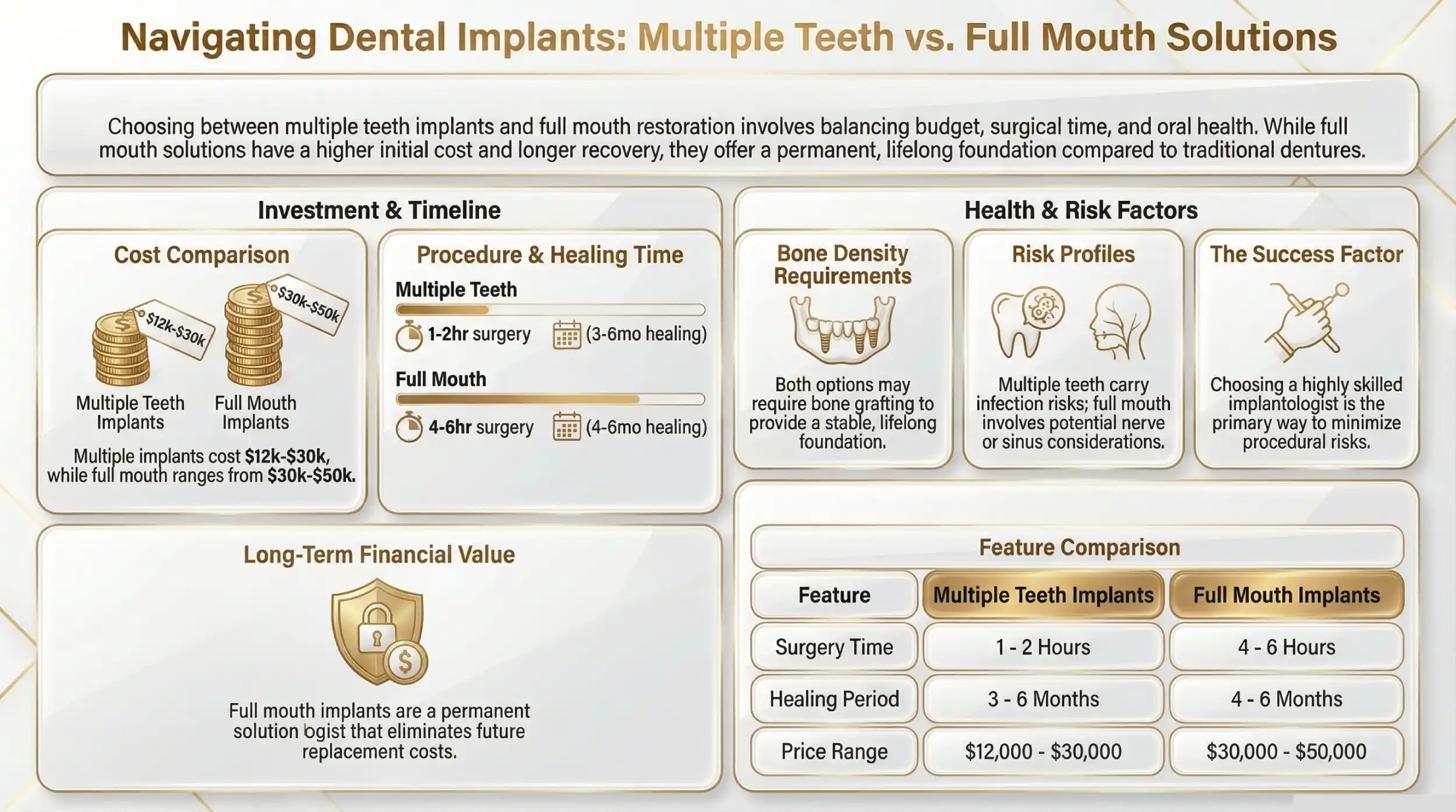
- Bone Grafting: Both multiple tooth implants and full mouth implants may require bone grafting if you have insufficient bone to support the implants. This is especially common for full mouth implants if the jawbone has deteriorated due to extended tooth loss. Bone grafting helps regenerate the bone, providing a stable foundation for the implants.
- Jawbone Strength: A strong jawbone is essential for successful implant placement. For multiple tooth implants, a healthy jawbone can be enough to support the implants. However, for full mouth implants, more extensive evaluation of the bone is required, and bone grafting may be necessary to ensure long-term success.
If your jawbone has diminished over time, your specialist might recommend a bone graft or a specific treatment to repair a damaged tooth structure to ensure your implants have a lifelong foundation.
Budget and Cost-Effectiveness
- Cost Comparison: The cost of multiple tooth implants is generally more affordable than full mouth implants. Multiple implants typically cost between $12,000 to $30,000, while full mouth implants can range between $30,000 to $50,000.
- Financing Options: Many dental clinics, including St Leonards Dental, offer financing options to make the procedure more accessible. Insurance may also cover a portion of the cost, particularly if the implants are considered medically necessary.
- Long-Term Value: While full mouth implants have a higher initial cost, they are often more cost-effective in the long run because they provide a permanent solution that eliminates the need for future replacements, unlike dentures.
Timeframe for Completion
- Multiple Teeth Implants: The overall procedure is typically quicker. You can expect the surgery to take 1-2 hours, with the healing process taking 3 to 6 months.
- Full Mouth Implants: This procedure is more extensive and will take longer, both in terms of surgery time and healing. You should expect 4 to 6 hours for the surgery and a 4 to 6-month healing period for osseointegration.
Risks and Potential Complications of Dental Implants
While dental implants are generally safe and successful, there are risks associated with both multiple-tooth implants and full-mouth implants.
Common Risks for Multiple Teeth Implants
- Infection: Infection can occur around the implant site. This can be avoided with proper aftercare and hygiene.
- Implant Failure: In rare cases, the implant may fail to integrate with the bone. This is more likely if proper aftercare is not followed.
- Bone Loss: Insufficient bone can lead to the need for bone grafting before implant placement. Without sufficient bone, the implant may fail.
Risks of Full Mouth Implants
- Nerve Damage: During implant placement, there is a risk of nerve damage, particularly when placing implants in the lower jaw. Choosing an experienced dentist reduces this risk.
- Sinus Problems: If the implants are placed in the upper jaw, sinus problems can occur if the implants are too long or improperly positioned.
- Implant Failure: Although rare, full mouth implants can fail due to improper osseointegration or other complications.
Choosing a highly skilled implantologist can minimise these risks and ensure a successful outcome for either procedure.
Aftercare and Maintenance: Keeping Your Implants in Great Shape
Taking care of your implants is essential for their longevity. Proper aftercare will ensure your implants function well for years to come.
How to Care for Multiple Teeth Implants
- Oral Hygiene: Brush and floss regularly around the implants to prevent gum disease and infection. Use a soft-bristled toothbrush to avoid damaging the gums.
- Regular Checkups: Schedule regular visits with your dentist to monitor the health of your implants and make sure they are functioning as expected.
- Avoid Damage: Avoid chewing on hard foods that could damage the implants or prosthetics.
How to Care for Full Mouth Implants
- Special Care: Full mouth implants may require more careful attention to ensure the entire set of implants stays in good condition. Your dentist will provide guidance on how to care for the implants and prevent gum disease.
- Routine Maintenance: Just like natural teeth, implants require regular cleanings. Schedule professional cleanings every six months and monitor the health of your gums.
- Adjustments: Over time, some adjustments may be needed to ensure that the prosthetics are comfortable and functional.
Frequently Asked Questions (FAQs)
How Long Do Multiple Tooth Implants Last Compared to Full Mouth Implants?
Both multiple-tooth implants and full-mouth implants are designed to be long-lasting. With proper care, implants can last for 20 years or more, often for a lifetime. The main difference is that full mouth implants typically require more implants, which may involve a longer healing and maintenance process.
Are Full Mouth Implants Covered by Insurance?
Insurance coverage for full mouth implants varies depending on the insurance provider and the specific plan. In some cases, insurance may cover a portion of the cost, especially if the implants are deemed medically necessary. However, many patients opt for financing options to make the treatment more affordable.
What’s the Healing Time for Multiple Teeth Implants vs. Full Mouth Implants?
- Multiple Teeth Implants: The healing process typically takes 3 to 6 months for the implants to fuse with the bone. During this time, temporary bridges or crowns may be used.
- Full Mouth Implants: Full mouth implants take a bit longer to heal, usually between 4 and 6 months. This is due to the number of implants placed and the need for osseointegration to occur across both the upper and lower jaw.
Can I Get Full Mouth Implants If I Have Bone Loss?
Yes, bone loss can be addressed with procedures such as bone grafting. If you have insufficient bone in the jaw, bone grafting can help restore enough structure for implants. This is common for patients with significant tooth loss or those who have had dentures for many years.
How Much Do Multiple Teeth Implants Cost Compared to Full Mouth Implants?
- Multiple Teeth Implants: Typically cost between $12,000 to $30,000, depending on the number of implants needed and the complexity of the case.
- Full Mouth Implants: The cost is usually higher, ranging from $30,000 to $50,000 for both the upper and lower jaw. However, full mouth implants provide a more comprehensive and permanent solution, making them a good long-term investment.
Making the Right Choice with St Leonards Dental
Choosing between multiple-tooth implants and full mouth implants comes down to your individual dental needs, budget, and lifestyle. Here are some factors to consider when making your decision:
- Multiple Teeth Implants: Ideal for individuals missing several adjacent teeth, but still have healthy teeth remaining. They are a more cost-effective option for restoring functionality in a specific area of your smile.
- Full Mouth Implants: Best for individuals who have lost most or all of their teeth and are looking for a complete restoration. Full mouth implants provide a permanent, stable solution that improves both aesthetics and function.
At St Leonards Dental, we understand that choosing the right dental implant solution is a significant decision. Our experienced team is here to help guide you through the process and ensure you make the best choice for your oral health. Book your consultation today, and take the first step towards a beautiful, functional smile that lasts a lifetime.


Dental implants are a permanent solution to missing teeth and they have a success rate of up to 95%. When Read more
Dental implants are more than just a solution for missing teeth; they play a crucial role in preserving jawbone health Read more